
Power generation utilisation rose to 85% in October: NERC

The Nigerian Electricity Regulatory Commission (NERC) said power generation utilisation stood at 85 per cent in October, with average hourly generation reaching 4,047 megawatts (MW).
NERC disclosed this in its October Operational Performance Fact Sheet, published on its official X handle in Abuja on Wednesday.
The factsheet provides a breakdown of the performance of grid-connected power plants during the month.
According to the factsheet, average available capacity stood at 4,744 MW during the period, while average hourly generation was 4,047 MW.
It indicated that 85 per cent of available generation capacity was utilised in the month under review.
“Average available capacity stood at 4,744 MW, with an average hourly generation of 4,047 MW, indicating that 85 per cent of available generation capacity was utilised,” it said.
It said the average load factor rose by 4.16 per cent, while average hourly generation fell by 1.02 per cent and average available capacity dropped by 5.85 per cent.
The commission said Jebba_1 recorded the highest load factor at 99 per cent, generating 423 MW against a capacity of 429 MW, followed by Omotosho_1 at 97 per cent (179 MW out of 183 MW) and Afam_2 at 94 per cent (371 MW out of 395 MW).
It listed other top energy producers as Egbin_1 and Ihovbor_2, each at 93 per cent, and Shiroro_1 at 89 per cent. Delta_1 and Kainji_1 each recorded 84 per cent, while Okpai_1 stood at 78 per cent.
“Odukpani_1 had the lowest load factor among the top producers at 66 per cent, generating 202 MW against 305 MW capacity,” it said.
On frequency stability, the commission said the average lower grid frequency of 49.46 Hz and the average upper grid frequency of 50.66 Hz exceeded the prescribed operational range of 49.75 Hz to 50.25 Hz.
On voltage, the monthly average lower grid voltage of 305.00 kilovolts (kV) and the average upper grid voltage of 353.94 kV also went beyond the prescribed range of 313.50 kV to 346.50 kV.
(NAN)

We have recently deactivated our website's comment provider in favour of other channels of distribution and commentary. We encourage you to join the conversation on our stories via our Facebook, Twitter and other social media pages.

More from Peoples Gazette

States
Independence: NBA urges Nigerians to expect better future
The NBA said that ordinary Nigerians should be deriving benefit from the subsidy removal rather than hardship.

Agriculture
FG tasks ECOWAS on leveraging financing strategies for agroecology
The federal government has urged stakeholders in the agriculture and finance sectors in the West Africa region to leverage financing strategies to enhance agroecology practices

Politics
Katsina youths pledge to deliver over 2 million votes to Atiku
“Katsina State is Atiku’s political base because it is his second home.”

Heading 4
115 million Nigerians benefiting from Gavi’s solarisation of 371 health facilities
The organisation stated that solarisation provides clean, reliable and sustainable energy to health facilities.
Hot news Home top
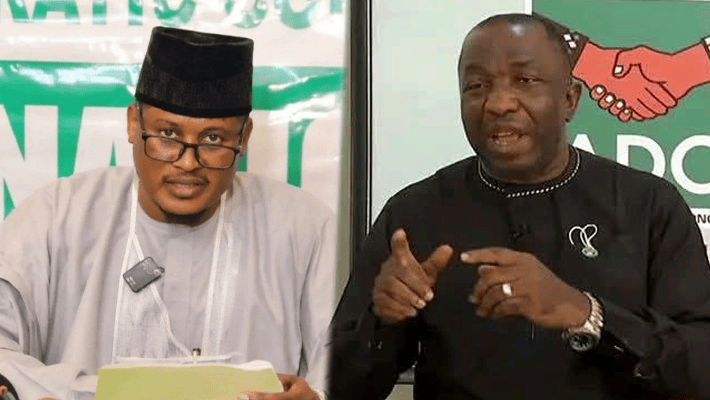
Bala used to beg for transport fare to attend ADC meetings; after going to court, he bought three bulletproof SUVs: Nwosu
According to him, Mr Gombe’s lifestyle changed after the legal dispute began.

States
NYSC members in Oyo receive October allowance after payment delay
The NYSC had attributed the delay to a technical glitch.

Heading 5
Ogun: Yayi pledges 24-hour power supply, infrastructure projects in Abeokuta
The CDC chairman described Mr Adeola as an experienced politician with the capacity to lead the state.
Education
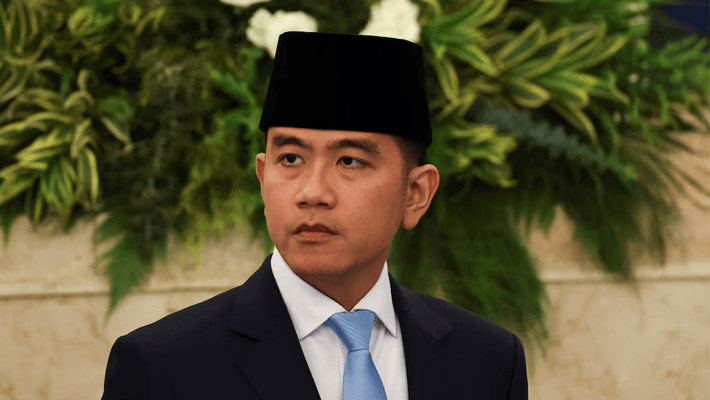
Indonesia’s VP considers resignation over education qualification scandal
Mr Gibran, 39, is the son of former Indonesian President Joko Widodo.
Lagos
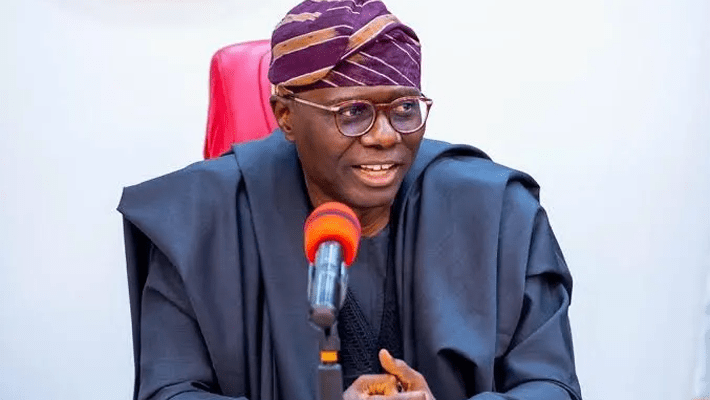
Lagos targets additional 2,000MW electricity supply by March 2027
Mr Sanwo-Olu said reliable electricity remained fundamental to economic growth.


