
115 million Nigerians benefiting from Gavi’s solarisation of 371 health facilities

Over 140 million residents in underserved communities in Africa and Asia are benefiting from the solarisation of more than 1,700 primary healthcare facilities in Nigeria, Ethiopia, Uganda, Zambia and Pakistan, in a project worth over $30 million.
Gavi, the Vaccine Alliance, in a statement on Wednesday in Geneva, Switzerland, stated that in Nigeria, it invested approximately $9 million of the fund in 371 healthcare facilities to benefit an estimated 115 million people.
Gavi said, “An ambitious drive to solarize primary health care facilities, backed by an investment of more than US$30 million from Gavi, the Vaccine Alliance, is helping unlock benefits for more than 140 million people in underserved communities across Africa and Asia.
“By solarising more than 1,700 facilities across Ethiopia, Nigeria, Pakistan, Uganda and Zambia, the initiative is helping address one of the most persistent barriers to equitable immunisation – unreliable access to electricity at frontline health facilities – while making long-term investments in health care service delivery.
“Across the five countries, these investments are improving health services for tens of millions of people. In Nigeria, the solarisation of 371 primary health care facilities is strengthening access to vaccines and basic health services for an estimated 115 million people through an investment of approximately US$9 million.
“In Ethiopia, 380 facilities have been solarised, serving about 8.6 million people through an investment of US$6.39 million. Pakistan has equipped 398 health facilities with solar power, extending services to around 12.4 million people through US$6.67 million in support.
“In Uganda, 250 facilities have been upgraded, serving approximately 3.1 million people through an investment of US$4.25 million, while in Zambia, the solarisation of 296 facilities is improving access to care for an estimated 1.3 million people, supported by US$4.17 million.”
According to Gavi, the milestone came as governments, development partners, climate experts and civil society convened at COP31 in Türkiye, where discussions focusing on practical solutions that strengthen community resilience while advancing climate and development goals were held.
Gavi decried the energy gaps that have long undermined efforts to expand immunisation programmes, leading to missed vaccination opportunities and persistent inequities in access to care.
The organisation stated that solarisation provides clean, reliable and sustainable energy to health facilities that are far from power grids or where power is expensive or only available for part of the day.
“With dependable electricity, clinics are better able to maintain vaccine cold chains, extend service hours and enable night-time and emergency services, operate essential medical equipment including diagnostics – supporting health workers in challenging environments and offer safer, more consistent care for communities,” it explained.
Gavi said its efforts to solarise the vaccine and healthcare supply chain demonstrate how investments in clean energy can simultaneously improve health outcomes and vaccine equity, strengthen immunisation and health systems for some of the world’s most underserved communities, and reduce emissions while increasing sustainability.
Director of Vaccine Forecasting and Supply Management at Gavi, the Vaccine Alliance, Ian MacTavish, stated that, “By investing in solar energy for primary healthcare facilities, Gavi is removing a critical bottleneck to vaccine equity while helping countries build stronger, more sustainable and climate-friendly health systems. Solar‑powered clinics ensure vaccines remain safe, health workers can deliver services consistently, and communities in far‑flung areas can access life‑saving vaccines and essential health services.”

We have recently deactivated our website's comment provider in favour of other channels of distribution and commentary. We encourage you to join the conversation on our stories via our Facebook, Twitter and other social media pages.

More from Peoples Gazette

States
Independence: NBA urges Nigerians to expect better future
The NBA said that ordinary Nigerians should be deriving benefit from the subsidy removal rather than hardship.

Agriculture
FG tasks ECOWAS on leveraging financing strategies for agroecology
The federal government has urged stakeholders in the agriculture and finance sectors in the West Africa region to leverage financing strategies to enhance agroecology practices

Politics
Katsina youths pledge to deliver over 2 million votes to Atiku
“Katsina State is Atiku’s political base because it is his second home.”

Economy
Reps introduce bill to establish PTDF governing board
A bill to establish a statutory governing board for the Petroleum Technology Development Fund (PTDF) passed its first reading in the House of Representatives.

Africa
Ghana’s President Mahama announces new offshore discovery
Mr Mahama announced a major new offshore oil and gas discovery following exploratory drilling at the Nya Gyidie 9-1X well in the Deepwater Cape Three Points contract area.

Politics
ECOWAS trains Gambian stakeholders ahead of December 5 presidential election
ECOWAS has begun training Gambian peace actors and electoral stakeholders ahead of the country’s presidential election scheduled for December 5.
Politics
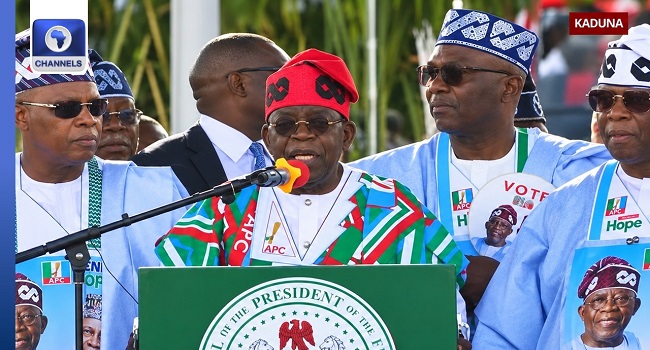
APC recycling failed 2023 promises in 2027 manifesto, ADC says
ADC described the All Progressives Congress’ newly released 2027 manifesto as a shameless repackaging of promises made in 2023, many of which remain unfulfilled.

Anti-Corruption
Two alleged Ogun fraudsters nabbed over N11 million fraud, money laundering
The police concluded investigations into an alleged ₦11 million farmland fraud involving advance fee fraud, money laundering, and criminal conspiracy.

Anti-Corruption
EFCC appeals ruling blocking final forfeiture of ex-Warri refinery boss’ $912,550 cash transactions
According to the EFCC, neither the property development payments nor the treasury bill investment was linked to Mr Yisawu’s legitimate earnings.


