
Five steps Nigerians should take to avoid catching Ebola virus
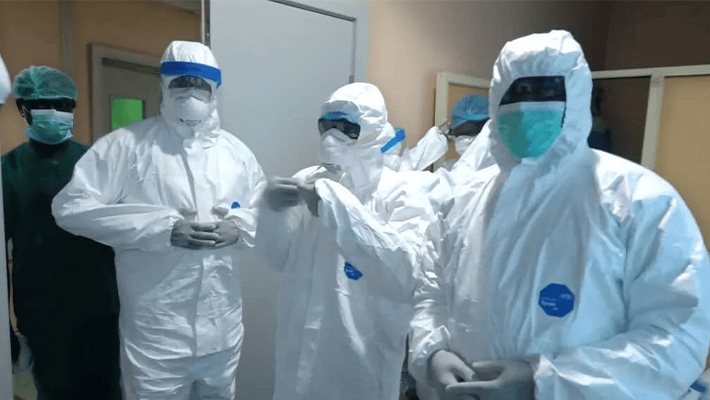
Nigeria confirmed its first case of Ebola virus in 2026 on Tuesday, with health minister Al Pate saying that the patient was a passenger who recently arrived in Nigeria on a flight from Uganda.
“A person who recently arrived in Nigeria on an international flight from Uganda was admitted to a private hospital in the FCT, where she received treatment for several days before the diagnosis was confirmed,” Mr Pate said in a statement on Tuesday.
The minister disclosed that 44 contacts had been traced to the carrier as the Nigerian government began operations to scramble a rapid response and prevent an outbreak. Amid ongoing contact-tracing efforts, Peoples Gazette shares five steps Nigerians can take to prevent contracting Ebola virus.
Avoid travel to Ebola epicentre
Nigerian travellers should avoid travelling to the Democratic Republic of Congo, South Sudan and Uganda, where the risk of contracting Ebola is currently considered highest. Many countries worldwide, including the United States and Canada, have imposed some level of travel restrictions on citizens of these countries, even with valid visas, as well as on other passengers who have transited through the nations.
Avoid contact with infected patients
The World Health Organisation’s guidelines on Ebola virus stated that close contact with someone suffering from the disease, especially their bodily fluids, is one of the most common ways people can contract Ebola.
The organisation subsequently advised Nigerians and citizens of other countries to distance themselves from Ebola patients as far as possible.
“Reduce the risk of human-to-human transmission arising from direct or close contact with infected people, particularly with their body fluids. Close physical contact with Ebola patients should be avoided.
“Patients should be isolated in a designated treatment centre for early care and to avoid transmission at home,” the organisation said.
Reduce consumption of wildlife
The WHO identified fruit bats and monkeys as potential sources of Ebola infection, advising the public to avoid contact with the animals and refrain from eating their raw or undercooked meat.
“Reduce the risk of wildlife-to-human transmission from contact with infected fruit bats or monkeys/apes and the consumption of their raw meat,” the WHO stated.
Practise good hand hygiene
Simple hand hygiene is the basic way to minimise the risk of contracting various diseases, including Ebola, so Nigerians should wash their hands frequently with soap and running water, particularly after visiting public places or caring for someone who is ill. It is also advisable to use an alcohol-based hand sanitiser when soap and water are unavailable.
Seek early medical treatment
The United States Centres for Disease Control and Prevention says that the symptoms of Ebola virus can include fever, headache, muscle pain, weakness, vomiting and diarrhoea.
It is advised that if an individual within the community develops symptoms after possible exposure, they should separate themselves from others and contact health authorities for urgent medical attention to reduce exposure and potentially prevent an outbreak.

We have recently deactivated our website's comment provider in favour of other channels of distribution and commentary. We encourage you to join the conversation on our stories via our Facebook, Twitter and other social media pages.

More from Peoples Gazette

States
Independence: NBA urges Nigerians to expect better future
The NBA said that ordinary Nigerians should be deriving benefit from the subsidy removal rather than hardship.

Agriculture
FG tasks ECOWAS on leveraging financing strategies for agroecology
The federal government has urged stakeholders in the agriculture and finance sectors in the West Africa region to leverage financing strategies to enhance agroecology practices

Politics
Katsina youths pledge to deliver over 2 million votes to Atiku
“Katsina State is Atiku’s political base because it is his second home.”
Health
Five steps Nigerians should take to avoid catching Ebola virus
Amid ongoing contact-tracing efforts, Peoples Gazette shares five steps Nigerians can take to prevent contracting Ebola virus.
Health
Ebola: Kano govt activates emergency operations centre
KNCDC has activated a public health emergency operations Centre following the federal government’s announcement of an Ebola case in the Federal Capital Territory.

Abuja
ACCI urges FG to sustain economic policies beyond 2027
ACCI has urged the federal government to sustain economic policies beyond the 2027 elections to support Nigeria’s ambition of building a trillion-dollar economy.

Economy
Tinubu’s Kaduna campaign flag-off drives hotel bookings to capacity
At Bafra Hotel, Yakubu Avenue, Ungwan Rimi, the manager, Christopher Ugbede, said all the hotel’s 149 rooms had been booked ahead of Mr Tinubu’s visit.

Africa
Nigeria, Ghana partner to strengthen fisheries management, blue economy
Nigeria and Ghana have partnered to strengthen fisheries management, protect marine resources and advance a secure, productive and sustainable blue economy in the Gulf of Guinea.

Heading 3
Ten things to know about Nigeria’s latest deadly Ebola virus case
Nigeria on Tuesday reported its first Ebola case in Abuja, the nation’s capital, where a female patient travelling through Uganda began presenting symptoms after arriving in the country.


