
WHO certifies Algeria trachoma-free, 29th globally to achieve status

The World Health Organisation has validated Algeria’s elimination of trachoma as a public health problem, making it the 10th country in the WHO’s African Region and the 29th globally to achieve the status.
Affecting the eye, trachoma is the leading infectious cause of blindness worldwide. Globally, the disease remains endemic in 30 countries and is responsible for the blindness or visual impairment of about 1.9 million people.
Algeria’s elimination of trachoma is a historic triumph that connects the past, present, and future of public health, and is rooted in a century-long commitment,” WHO boss Tedros Ghebreyesus said in a statement on Thursday.
According to the latest figures, 97 million people live in trachoma endemic areas and are at risk of trachoma blindness. The disease is caused by the bacterium Chlamydia trachomatis, which is spread through contact with infected eye discharge via hands, clothing, or flies.
Repeated infections can lead to scarring of the inner part of the upper eyelid, turning eyelashes inward to scratch the eyeball: a painful condition known as trachomatous trichiasis that can lead to visual impairment and blindness.
Algeria’s fight against trachoma dates back to the early 20th century with the establishment of the Pasteur Institute of Algeria in 1909.
After independence, Algerian physicians, led by Mohamed Aouchiche, took charge of this work. Their efforts were strengthened by the creation of a national public healthcare system that began to provide services free of charge to patients in 1974.
For decades, Algeria implemented the WHO-recommended SAFE Strategy to eliminate trachoma.
These activities included providing surgery to treat the late blinding stage of the disease (trachomatous trichiasis), administering mass antibiotic treatment, conducting public awareness campaigns to promote facial cleanliness and personal hygiene, and improving access to water supply and sanitation.
To accelerate trachoma elimination, Algeria implemented a three-year strategy in 2013–2015 and established a National Expert Committee.
The focus was on eliminating trachoma in 12 southern wilayas (provinces), including Adrar, Laghouat, Biskra, Béchar, Tamanrasset, Ouargla, El Bayadh, Illizi, Tindouf, El Oued, Naama, and Ghardaïa, where the disease remained a public health problem.
WHO-compliant surveys conducted in 2022 confirmed that the elimination threshold for active trachoma was achieved in all areas, and the TT threshold was achieved in all but three areas.
In those three areas, full geographic coverage with door-to-door screening and management of TT cases was subsequently implemented to ensure TT elimination.
In December 2025, Algeria’s health ministry compiled and submitted a dossier containing evidence that the country meets the WHO criteria for the elimination of trachoma as a public health problem.
The existence of a well-functioning school health system, a health information system, broad access to water and sanitation, and extensive coverage of specialised eye care throughout the country are notable strengths, as they provide assurance for the post-validation period in the country.
WHO recommends that surveillance continue even after validation of elimination, with the aim of closely monitoring populations previously endemic for trachoma to ensure there is no resurgence.
(NAN)

We have recently deactivated our website's comment provider in favour of other channels of distribution and commentary. We encourage you to join the conversation on our stories via our Facebook, Twitter and other social media pages.

More from Peoples Gazette

Agriculture
FG tasks ECOWAS on leveraging financing strategies for agroecology
The federal government has urged stakeholders in the agriculture and finance sectors in the West Africa region to leverage financing strategies to enhance agroecology practices

Politics
Katsina youths pledge to deliver over 2 million votes to Atiku
“Katsina State is Atiku’s political base because it is his second home.”

World
EU plans tougher sanctions on Russia after Orbán’s departure
EU top diplomat Kaja Kallas announced this on the sidelines of an EU summit in Nicosia.

Heading 4
Tinubu prefers consensus governorship candidate in Oyo, says Adelabu
“He (Tinubu) said we should all go and meet as a party, reach consensus among ourselves as a party with critical stakeholders on the ground,
Abuja
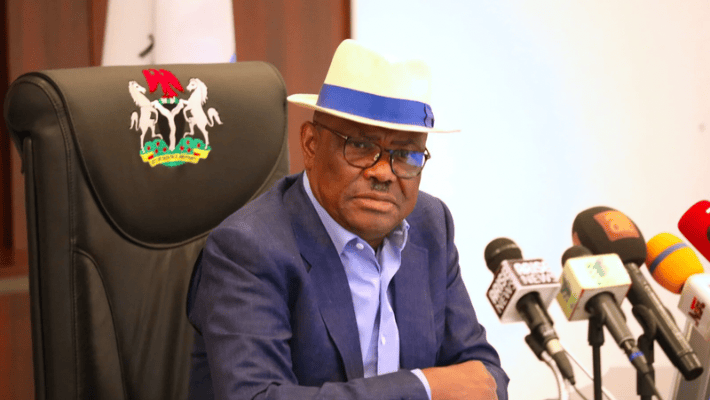
Wike moves to end strike, promises FCT teachers prompt action
FCT minister Nyesom Wike has intervened in the lingering teachers’ crisis in Abuja by ordering direct payment of allowances and emoluments.
Abuja
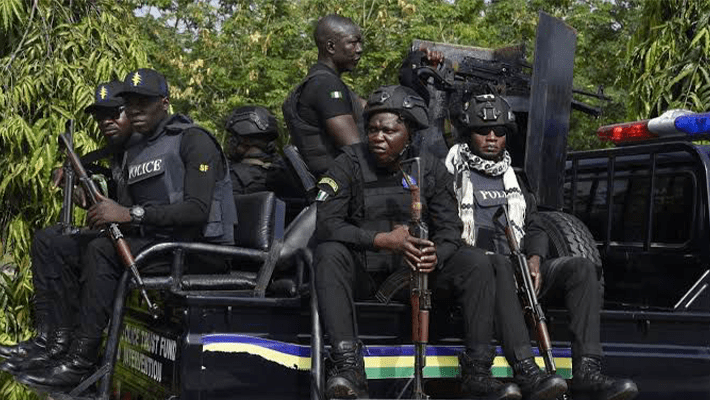
Creation of state police to gulp about N1 trillion; first recruits scheduled for 2027-2028: Report
The first cohort of state police recruits would only be enrolled in phase two (months 13 to 24), and their deployment would not begin until phase three (months 25 to 42).
Economy
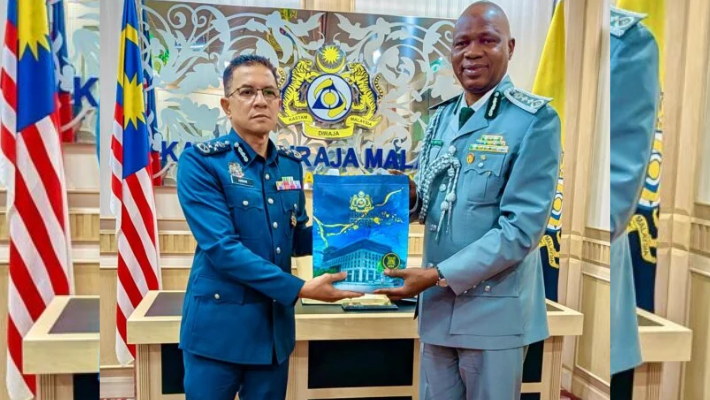
Nigeria, Malaysia deepen cooperation on trade facilitation, border management
The Nigeria Customs Service says it has deepened bilateral cooperation with the Royal Malaysian Customs Department on trade facilitation and border management.

Economy
NITDA launches innovation hub to boost digital skills, ideas
The NITDA boss restated the importance of visibility and self-promotion in career growth, noting that hard work alone is no longer sufficient.


