

Tuberculosis: Nigeria records over 510,000 cases, scales up community, tech-driven response

Nigeria has intensified efforts to eliminate tuberculosis through community-led action, increased domestic financing, and the rollout of innovative diagnostic technologies, as the country records over 510,000 cases annually.
This was the focus of a pre-World TB Day press conference on Tuesday in Abuja, where stakeholders stressed the urgency of accelerating progress despite persistent challenges.
Nigeria remains the country with the highest TB burden in Africa and ranks sixth globally, with an incidence rate of 219 cases per 100,000 population, accounting for about 20 per cent of Africa’s TB burden.
Charles Nzelu, director of public health at the Federal Ministry of Health and Social Welfare, said Nigeria had made significant progress under its National Strategic Plan (2021–2026), particularly in improving TB case notifications.
Mr Nzelu, however, noted that the burden remained high, requiring sustained innovation and stronger health systems.
According to him, the National Tuberculosis and Leprosy Control Programme (NTBLCP) is leading the nationwide rollout of over 1,000 PlusLife Mini Dock diagnostic platforms to expand access to molecular testing, especially in underserved communities.
“This near-point-of-care technology is a game-changer, ensuring that no Nigerian is left behind due to geography,” he said.
He added that efforts were ongoing to strengthen electronic reporting systems to enable real-time data tracking, improve supply chain management, and prevent stock-outs of essential TB medicines.
“As we approach World TB Day, we must renew our collective commitment. Yes, the challenge is great, but our resolve is greater. Together, we can end TB in Nigeria,” he said.
Also speaking, Adesigbin Olufemi, the acting national coordinator of the NTBLCP, said Nigeria recorded more than 510,000 TB cases in 2025, underscoring the scale of the public health challenge.
Mr Olufemi said the programme, established in 1988 and operational since 1991, continues to coordinate nationwide efforts to control TB, leprosy, and Buruli ulcer, with services now expanded across all local government areas.
He noted that more than 3,400 microscopy centres, 527 GeneXpert machines, and other diagnostic tools had been deployed across public and private health facilities to improve access to testing and treatment.
Mr Olufemi added that strategies such as early case detection, integration of TB services into general healthcare, and public-private partnerships were helping to strengthen response efforts.
Earlier, Queen Ogbuji-Ladipo, board chair of Stop TB Partnership Nigeria, said the 2026 World TB Day theme, “Yes! We Can End TB – Led by the Federal Ministry of Health and Powered by the Communities” highlighted the importance of both government leadership and grassroots participation.
Ms Ogbuji-Ladipo noted that tuberculosis remained one of the leading infectious diseases globally, with Nigeria bearing a significant share of the burden.
“Ending TB requires strong leadership from government, while communities remain the driving force for awareness, prevention, treatment adherence, and accountability,” she said.
Also, Joel Mayowa, executive secretary of Stop TB Partnership Nigeria, said the global theme emphasised that ending TB was achievable when governments take responsibility for designing and funding context-specific interventions and communities actively drive awareness and support treatment efforts.
“TB survivors, healthcare workers, and civil society organisations are central to identifying cases, reducing stigma, and ensuring patients complete treatment.
“In Nigeria, governments at all levels must prioritise TB in budgets and create space for private sector participation. Ending TB cannot depend solely on donor funding,” he said.
Adding a human perspective, Francis Ejiga, a TB survivor, called for intensified awareness and an end to stigma, describing discrimination as one of the biggest challenges faced by persons affected by the disease.
Mr Ejiga recounted losing his mother to TB before later contracting the disease himself in 2015.
He explained that he received treatment at a health facility, where he was placed on a structured regimen and supported by healthcare workers, eventually making a full recovery.
Despite his recovery, he noted that reintegration into society was difficult due to stigma.
“People avoided me because they lacked the right information. Awareness and education are key to ending stigma,” he said.
Meanwhile, stakeholders identified key challenges to include persistent stigma, funding gaps, uneven quality of care, and the need to strengthen pharmacovigilance for new TB drug regimens.
Ogoamaka Chukwuogo, Chief of Party for the TB LON 1 and 2 Project, emphasised the need for continued investment in health system strengthening, including human resources, laboratory capacity, supply chains, and monitoring systems.
Ms Chukwuogo underscored the critical role of the media in combating stigma and raising awareness and called on Nigerians to seek testing if they experienced a persistent cough lasting two weeks or more.
(NAN)

We have recently deactivated our website's comment provider in favour of other channels of distribution and commentary. We encourage you to join the conversation on our stories via our Facebook, Twitter and other social media pages.

More from Peoples Gazette

Agriculture
FG tasks ECOWAS on leveraging financing strategies for agroecology
The federal government has urged stakeholders in the agriculture and finance sectors in the West Africa region to leverage financing strategies to enhance agroecology practices

Politics
Katsina youths pledge to deliver over 2 million votes to Atiku
“Katsina State is Atiku’s political base because it is his second home.”

Politics
Gov Aiyedatiwa reopens central mosque shut down by Akeredolu in 2022
The mosque was shut down by former Governor Rotimi Akeredolu to prevent violence in the town due to leadership tussles to remove the imam.
States
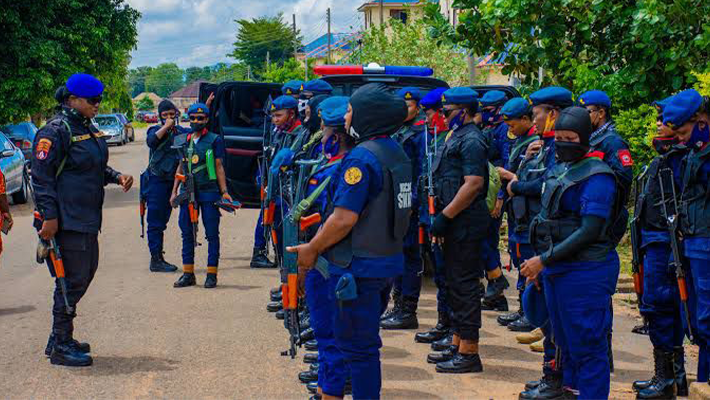
Ondo: 1,000 NSCDC operatives to provide security cover during sallah
The Nigeria Security and Civil Defence Corps says it has deployed 1,000 officers to beef up security ahead of the 2026 Eid-el-Fitr celebration.

Economy
Guinea Insurance signs N5.8 billion rights issue to boost capital
The company said the move marked a key step in its strategy to expand operations, enhance innovation and improve shareholder returns.

World
UAE calls on Iran to halt military attacks immediately
Iran has been attacking Gulf states since the start of the war around two and a half weeks ago, with the UAE coming under particularly heavy fire.

World
Saudi Arabia to host Arab, Islamic foreign ministers for talks
Saudi Arabia has invited foreign ministers from several Arab and Islamic countries to talks in Riyadh on Wednesday evening.

World
Cuba’s president fires back at Trump over takeover comments
Cuban President Miguel Díaz-Canel has fired back at comments by U.S. President Donald Trump about a possible takeover of Cuba.


