

Tinubu digging economic hole for Nigerians by borrowing more: Emir Sanusi
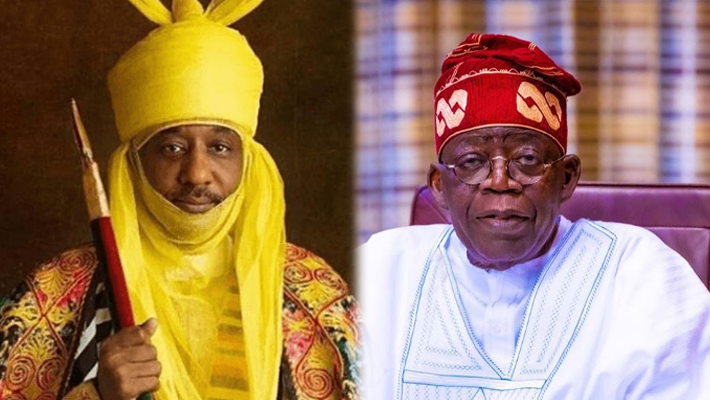
The Emir of Kano, Muhammadu Sanusi II, and the founder of Stanbic IBTC Bank, Atedo Peterside, have urged President Bola Tinubu’s government to ensure that its economic reforms are inclusive and fiscally disciplined. Mr Sanusi warned that the government’s penchant for borrowing is tantamount to digging an economic “hole”.
They made the call in Abuja during a high-level dialogue on Nigeria’s economic direction, governance, and reform priorities, at the Oxford Global Think-Tank Leadership Conference and Book Launch.
While commending the bold reforms, both cautioned that the government must address rising poverty and the cost of living by curbing waste and directing resources to help ordinary Nigerians.
Mr Sanusi commended Mr Tinubu for removing fuel subsidy and unifying exchange rates, describing both as “painful but necessary steps”.
“We were paying the difference between global oil prices and a fixed local pump price with borrowed money. That was not a subsidy; it was an unsustainable hedge that led us to bankruptcy,” the former Central Bank of Nigeria governor stated.
He, however, cautioned that without institutional reforms and prudent spending, Nigeria risks undoing the benefits of the painful but necessary economic adjustments.
“If you stop paying subsidies but continue to borrow more, it means you filled one hole only to dig another. This government needs to look at institutions, procurement processes, and the quality of spending,” added Mr Sanusi. “Otherwise, we’ll undo the progress already made.”
The ex-CBN governor pointed out that he and other reform advocates warned against subsidy when he was in the office. He, however, said, “Nigeria is plagued by too many sycophants in government. In 2012, we warned that the subsidy was unsustainable, but politics took over.”
Mr Sanusi praised the current economic team led by finance minister Wale Edun and CBN governor Yemi Cardoso, noting that they have stabilised inflation and exchange rate volatility, but urged the government to reduce waste and the size of its cabinet.
He also highlighted the need to reduce governance costs. Mr Sanusi urged ministers and presidential advisers to restore integrity to public service by speaking truth to power, saying blind loyalty has been one of Nigeria’s greatest obstacles to progress.
Mr Peterside commended Mr Tinubu’s administration for removing fuel subsidy and introducing a market-determined exchange rate. He, however, said the real test of leadership lay in how the revenues saved were utilised.
“The government has done the correct thing in removing an unaffordable subsidy and allowing market-determined exchange rates,” Mr Peterside explained. “What is the point of giving a thief more revenue if he’s only going to steal it? The real test is what is being done with that money.”
He stressed the need for government at all levels to cut the cost of governance, saying, “After removing the subsidy, the next step should have been immediate cash transfers to the poorest Nigerians to cushion the pain.”
Mr Peterside reiterated that structural reforms must be accompanied by good governance and social protection to ensure that economic pain translates into real gains for citizens.
“It’s not true that pain automatically leads to gain. Gain follows pain only if you do the right things afterward — reduce waste, invest in productive sectors, and support the poor,” he said.
(NAN)

We have recently deactivated our website's comment provider in favour of other channels of distribution and commentary. We encourage you to join the conversation on our stories via our Facebook, Twitter and other social media pages.


More from Peoples Gazette

Agriculture
FG tasks ECOWAS on leveraging financing strategies for agroecology
The federal government has urged stakeholders in the agriculture and finance sectors in the West Africa region to leverage financing strategies to enhance agroecology practices

Politics
Katsina youths pledge to deliver over 2 million votes to Atiku
“Katsina State is Atiku’s political base because it is his second home.”

Economy
OTL: Africa seeks energy policy harmony
The appeal came during the 19th Oil Trading and Logistics Africa Downstream Energy Week 2025 held on Wednesday in Lagos.
![Delta Governor, RT. Hon Sheriff Oborevwori [Photo: Facebook/ Sheriff]](https://i1.wp.com/gazettengr.com/wp-content/uploads/Delta-Governor-RT.-Hon-Sheriff-Oborevwori-Facebook-Sheriff-1.png)
Economy
Delta lauds LIFE-ND Project for engaging over 600 people
The LIFE-ND project has completed its first six-year circle and has empowered 4,373 rural youths and women through agribusiness in Delta.

Economy
MEMAN says fuel subsidy removal spurs energy innovation
He, however, stressed that regulatory clarity and stability are vital for investor confidence and long-term growth in the downstream sector.

Agriculture
Group hails passage of wildlife bill
With Senate approval secured, the bill now awaits presidential assent to strengthen action against wildlife crime.

Economy
NUPRC seeks Bank of America funding for Nigeria’s upstream sector
Mr Komolafe said the engagement was in line with Section 6(h) of the Petroleum Industry Act (PIA) 2021.

Politics
Zamfara: No defection can shake our foundation, PDP declares
While the PDP is the ruling party in the state, the APC holds sway at the federal level.


