

Scientists urge commercialisation of food research to boost industry growth
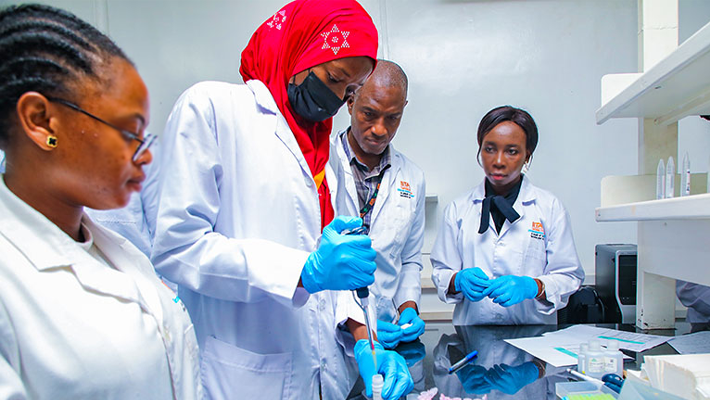
Okolie Nwabueze, director of the Centre for Technology Marketing and Product Development at Yaba College of Technology (YABATECH), says commercialising food research is critical to industrialisation, job creation, exports, and economic sustainability.
He made this known during NIFST’s 12th Regional Food Science and Technology (REFoST) technical paper presentation on Tuesday in Lagos.
Mr Nwabueze said innovation achieved little value when research findings remained confined to laboratories, academic journals and institutional libraries without reaching consumers and industries.
According to him, research outputs must be transformed into products, technologies and services capable of creating wealth, solving societal challenges and driving industrial development.
“Research is only meaningful when it leaves the laboratory and gets to the market, where people can benefit from it. If research remains on the shelf, its economic value is lost,” he said.
The technology marketing expert identified inadequate infrastructure, weak innovation ecosystems, poor funding, and insecurity as major challenges that limit the commercialisation of food research in Nigeria.
According to him, insecurity continues to affect agricultural production, disrupt supply chains and restrict access to raw materials required for food processing.
Speaking on export opportunities, Mr Nwabueze said international standards are not barriers when producers comply with established quality, safety and regulatory requirements.
“We should not see global standards as obstacles. The real challenge is building the capacity and infrastructure required to consistently meet those standards,” he said.
Also speaking, the chairman of the Nigerian Institute of Food Science and Technology (NIFST), Lagos Chapter, Kikelomo Amoreoluwa, said the summit was designed to bridge the gap between research institutions and industry.
She noted that many innovative research outputs never progressed beyond academic environments despite possessing significant commercial and industrial development potential.
Ms Amoreoluwa said one of the highlights of the summit was a three-minute thesis competition involving final-year students of Yaba College of Technology.
She said the students presented research projects on plant-based meat alternatives produced from soya beans and mushrooms using wheat gluten as a binder.
She said another presentation focused on optimisation and quality evaluation of composite flour produced from orange-fleshed sweet potato and okra for functional food applications.
Ms Amoreoluwa noted that the third presentation examined the effect of pre-treatment methods on the nutritional and bioactive content of African spinach and Jatropha tanjorensis, also known as ‘hospital too far leaf’, as functional ingredients in bread-making.
According to her, the students’ presentations demonstrated the enormous opportunities available for transforming academic research into commercially viable food products.
“We want research outputs to move beyond libraries and laboratories into products that are packaged, labelled, marketable and globally competitive,” she said.
She identified inadequate funding, limited processing facilities and regulatory bottlenecks as major constraints confronting food innovators and emerging entrepreneurs.
The NIFST chairman advocated establishing innovation hubs and shared processing centres to support product development and regulatory compliance.
She added that increased government support would enable more innovators to scale their products and obtain necessary certifications for market access.
Beatrice Oganah-Ikujenyo, chairman of the Local Organising Committee of the NIFST Lagos Chapter, said food research remained critical to addressing food insecurity and hidden hunger challenges.
She explained that innovation could transform underutilised crops and indigenous food resources into nutritious products that appeal to modern consumers.
According to her, research should not remain within academic institutions but should contribute directly to improving nutrition, public health and economic outcomes.
“Research efforts become truly impactful when they are translated into products and solutions that improve lives, strengthen food security and support economic development,” she said.
Ms Oganah-Ikujenyo said developing a wider range of food products would increase dietary diversity while creating additional business opportunities across agricultural value chains.
She further noted that food innovation offered practical solutions for enhancing food availability, reducing losses and strengthening national food systems.
(NAN)

We have recently deactivated our website's comment provider in favour of other channels of distribution and commentary. We encourage you to join the conversation on our stories via our Facebook, Twitter and other social media pages.

More from Peoples Gazette

Agriculture
FG tasks ECOWAS on leveraging financing strategies for agroecology
The federal government has urged stakeholders in the agriculture and finance sectors in the West Africa region to leverage financing strategies to enhance agroecology practices

Politics
Katsina youths pledge to deliver over 2 million votes to Atiku
“Katsina State is Atiku’s political base because it is his second home.”

World
Philippines’ earthquake death toll rises to 37, 32,000 displaced
About 2,500 houses, 6,000 schools, and 117 government buildings were damaged across provinces in the Philippines.

States
Jigawa to institutionalise citizens’ engagement programme: Official
He said the endorsement of the framework followed the successful implementation of the programme across the 27 local government areas over 10 months.

Economy
Senate gives Bank of Agriculture, two others one-week ultimatum over audit queries
The directive followed the organisations’ failure to appear during the committee’s hearing on Tuesday in Abuja.

NationWide
Nigerians, other Africans still grapple with hardship despite modest economic improvements: Report
The survey showed that nearly half of the respondents described their living circumstances as bad, while the majority said they or family members went without basic necessities.

States
Kwara police arrest four suspected robbers, recover stolen motorcycle
The command said the assailants inflicted injuries on the victims and forcefully dispossessed them of their motorcycle before fleeing the scene.

States
Police arrest seven suspects, recover arms in Kwara kidnapping network raid
The command added that the suspects were assisting investigators with valuable information aimed at rescuing victims believed to still be in captivity.


