

Residents lament worsening water scarcity in Niger community
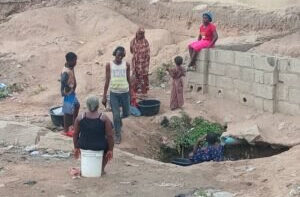
Residents of Kwamba community in the Suleja axis of Niger State have raised concerns over worsening water scarcity, describing the situation as a growing burden.
Some residents, who spoke on Saturday said access to clean water had become increasingly difficult and frustrating.
A student, Kisiah Jeremiah, said the situation was affecting her punctuality at school.
She said that long queues at wells often meant the water would run out before it got to her turn, forcing her to search elsewhere.
“Sometimes, we wake up very early to look for water so we won’t be late for school. At times, we even go to a dried river and wait for the little water that seeps out, but many people are already there.
“We notice changes in our bodies, such as rashes and stomach pain. Some people keep treating malaria repeatedly because of the water we use,” she said.
An artisan, Patrick Ojuche, described the situation as unbearable, especially for his family.
“My wife is pregnant, so I cannot allow her to fetch water. After a long day at work, I still have to look for water for the household because vendors do not come regularly,” he said.
A trader and widow, Rabiat Abdulkadir, said the situation was difficult for her as she lived alone.
“All my children are no longer at home. I have to fetch water myself. Water vendors charge between N1,500 and N2,000, and even finding them is a struggle,” she said.
Ms Abdulkadir said that the available water often caused rashes and stomach upset, adding that she had no alternative.
Another resident, Rachel Ologunde, said the scarcity was a recurring problem, especially during the dry season.
She stated, “We go long distances from one well to another. Even at boreholes, queues are long and sometimes chaotic. Access depends on when the owner decides to open.”
The residents appealed to government authorities to provide additional boreholes to ease the situation and reduce the pressure on existing sources.
Efforts to obtain comments from the local government chairman were unsuccessful as his mobile was unreachable.
(NAN)

We have recently deactivated our website's comment provider in favour of other channels of distribution and commentary. We encourage you to join the conversation on our stories via our Facebook, Twitter and other social media pages.

More from Peoples Gazette

Agriculture
FG tasks ECOWAS on leveraging financing strategies for agroecology
The federal government has urged stakeholders in the agriculture and finance sectors in the West Africa region to leverage financing strategies to enhance agroecology practices

Politics
Katsina youths pledge to deliver over 2 million votes to Atiku
“Katsina State is Atiku’s political base because it is his second home.”
States
CSCI Africa inaugurates committee for South-East security summit
He described security consciousness as a critical pillar for national growth.

States
Six suspected kidnappers arrested, firearms recovered in Kwara: Police
According to the police, further investigations led to the arrest of additional suspects.
States
SFH inaugurates borehole in Edo community
He emphasised that residents had long relied on unsafe water sources.

NationWide
Nigeria needs stronger economic base to fix power sector, says expert
Mr Iledare explained that electricity is not just about generating power but about ensuring it is affordable.
States
Army holds medical outreach in Kaduna community
According to him, Birnin Yero shares close proximity with the Jaji Military Cantonment.

NationWide
Dangote’s aviation fuel price disclosure will drive market stability: NMDPRA
The NMDPRA pricing framework was derived from Platts average figures recorded between April 17 and 23, reflecting prevailing global oil market conditions.


