

Remembering Professor Abubakar Momoh
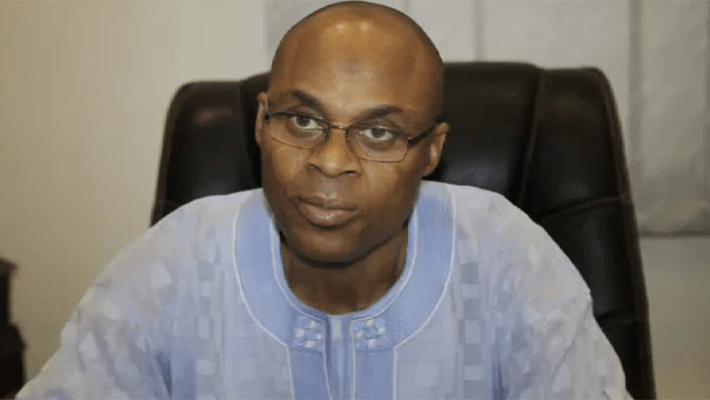
Nine years have passed since Professor Abubakar Momoh departed this world, though his memory remains alive in the minds of those who encountered his intellect, generosity, camaraderie, and uncommon humanity. Time has carried away many voices from my generation of activists and scholars, but Abu’s voice still returns with remarkable clarity whenever conversations turn to scholarship, democratic struggle, and the moral burden of public life. I first met Abu in December 1990 during my maiden tour of university campuses as President of the National Association of Nigerian Students, NANS. I had just arrived at the campus of Lagos State University when the then President of the students’ union, Tony Olusanya, now a professor at Osun State University, said to me with excitement, “Comrade President, come and let me take you to your brother, Dr Abubakar Momoh.”
That introduction opened the door to a friendship that lasted for decades.
Abu was already gaining recognition as a brilliant and fearless scholar. Students spoke about him with admiration. Younger academics sought him out. His writings in newspapers and journals travelled far beyond the classroom. He possessed that rare ability to make difficult theoretical questions accessible without diluting their depths. Meeting him for the first time, I encountered neither arrogance nor distance.
There was warmth in his manner and seriousness in his engagement. He welcomed me wholeheartedly and invited me, alongside his colleague, Adetunmobi, to a nearby buttery where we settled down over drinks and conversation. I remember raising an issue concerning one of his opinion pieces in the Daily Times newspaper. The article examined theoretical frameworks and the distinction he drew between contextual, conceptual, and contentual approaches. Abu explained his argument patiently, guiding me through concepts that were still forming in my young consciousness. Years later, during my graduate studies in England, I found myself returning to lessons from that conversation.
Such moments defined Abu. His scholarship was never perfunctory. His was a lifelong commitment to inquiry, clarity, and public education.
Coming from Etsako in Edo State, our hometowns of Auchi (Abu’s) and Sabo (mine) were separated only by the Polytechnic. I also felt pride watching him carry forward the legacy of Pa Michael Imoudu alongside other distinguished activist Afemai sons such as Abdul Oroh, Mike Ozekhome, and Adams Oshiomhole. For a small ethnic group perched in the northern part of Edo State, seeing men from our nation shape national conversations on labour, democracy, law, and social justice carried deep emotional meaning for a young national student leader at the time.
Abu represented intellectual excellence grounded in radical purpose.
Life eventually scattered many of us across towns and continents. Activism gave way to careers, exile, family responsibilities, and the passage of years. Despite the interruptions created by time and distance, Abu retained his remarkable capacity for friendship.
In November 2010, shortly after my return to Nigeria following more than a decade abroad, my phone rang on a Sunday morning. “Ozawo,” he said warmly, using the Etsako expression for Mister man, “I heard you’re back in the country. Welcome. If you are free later today, can you meet me at my hotel? I’m in Abuja for a few days.”
We met at Peniel Apartments and spent hours catching up on old comrades, political developments, and the country we both cared deeply about. Abu spoke with the same intellectual sharpness I remembered from Lagos years earlier, though age and experience had added greater calm to his reflections. Our conversations moved easily between politics and personal matters. Every now and then, in later years, he would call to ask after the children of departed comrades and discuss ways to support them. Those gestures revealed the tenderness behind his formidable public image.
He carried people in his heart.
The news of his death on 29 May 2017 remains one of the most painful moments of my adult life. I had arrived in Yola that morning when I saw a message from Comrade Otive Igbuzor informing me that Abu had died. Disbelief gave way to grief. Calls to mutual friends confirmed the devastating news. Nigeria had lost a major intellectual voice. Many of us had lost a brother. I lost a kindred.
Abu belonged to a generation of scholars who understood that ideas mattered in the shaping of nations. His work traversed political theory, governance, democratic practice, and electoral studies. His doctoral thesis, Nkrumah and African Liberation: The Limits of Praxis, reflected his enduring engagement with African political thought and liberation struggles.
He wrote extensively on state formation, civil society, corruption, and democracy with the rigour that earned him respect across academic and activist circles. His scholarship was inseparable from his public engagement. Students found in him a teacher who challenged complacency. Activists discovered a thinker willing to place intellectual labour at the service of democratic struggles. Younger scholars encountered a mentor, generous with time and encouragement.
Our country’s public life has grown poorer with the departure of minds like his. Public discourse today often rewards noise above anything else. Abu stood for intellectual discipline rooted in historical understanding and moral seriousness. He believed scholarship should illuminate society rather than enhance personal ambitions. Nine years after his death, memory continues to return me to that young scholar I first encountered at LASU in 1990. I still see the animated conversations, the welcoming smile, and the genuine concern for others that defined his life. Death ended his earthly journey, though it could not erase the imprint he left on friends, students, colleagues, and comrades.
For many who walked beside him at different moments in life, Abu remains present in thoughts, conversations, and remembrances. His ideas, intellect, and humanity endure. Sleep well, native of my person.
Abdul Mahmud, a human rights attorney in Abuja, writes weekly for The Gazette

We have recently deactivated our website's comment provider in favour of other channels of distribution and commentary. We encourage you to join the conversation on our stories via our Facebook, Twitter and other social media pages.

More from Peoples Gazette

Agriculture
FG tasks ECOWAS on leveraging financing strategies for agroecology
The federal government has urged stakeholders in the agriculture and finance sectors in the West Africa region to leverage financing strategies to enhance agroecology practices

Politics
Katsina youths pledge to deliver over 2 million votes to Atiku
“Katsina State is Atiku’s political base because it is his second home.”

Africa
Senegal nominates Birame Diop as candidate for ECOWAS Commission president
Senegal has nominated Birame Diop, a retired air force general and the country’s current minister of the armed forces, as its candidate for ECOWAS president.

Education
365 Nigerian students expelled for forging academic credentials to gain admission into MAPOLY
The management of the Moshood Abiola Polytechnic, Abeokuta, has expelled 365 students for securing admission with falsified academic documents.

Economy
Economic cost of tobacco consumption in Nigeria is N211 billion annually: NTCA
The economic burden of tobacco consumption in Nigeria totals roughly N211.2 billion annually, spanning direct healthcare costs and indirect losses from illness and premature death.
States
Court sentences tricyclist to death for murder of passenger in Anambra
Trial judge Justice Lauretta Oyeka, in her judgement, convicted Mr Ezike of the murder of Jude Onwuegbuchunam, an indigene of Umuoji in Anambra.

Anti-Corruption
Doximity chief revenue officer Paul Jorgensen jailed 26 months for insider trading
In addition to the prison sentence, Mr Jorgensen, 53, of Charlotte, North Carolina, was sentenced to two years of supervised release and ordered to pay $2,532,775.52 in forfeiture.
Sport
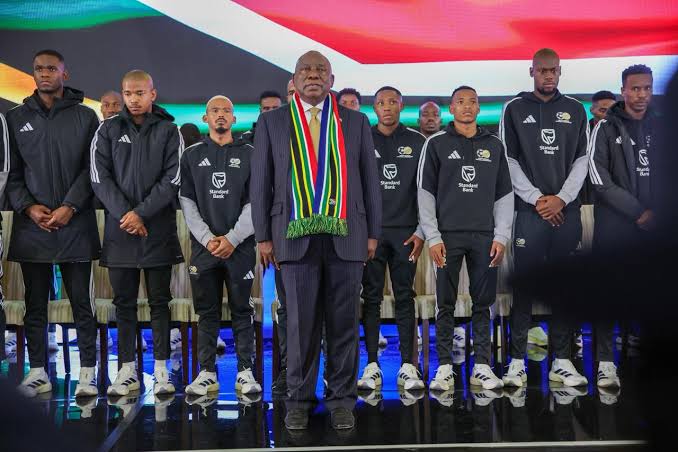
2026 FIFA World Cup: Ramaphosa rallies support for South Africa’s Bafana Bafana
“For 90 minutes, as they play for our country, we will not be divided by language, race, province, club or circumstance,” Mr Ramaphosa stated.


