
Persian Gulf crisis impacting food security, FAO warns

The Food and Agriculture Organisation says intensifying conflict in the Persian Gulf “has triggered one of the most rapid and severe disruptions to global commodity flows in recent times”.
The FAO chief economist, Máximo Torero, told journalists at UN Headquarters in New York on Thursday.
Mr Torero said the crisis was affecting agricultural production and food security worldwide, impacting farmers and migrant workers.
“Temporality matters a lot right now, and the clock is ticking very hard, and I think we need to find a solution as soon as possible,” he said.
Since the war erupted, tanker traffic in the Strait of Hormuz has declined by more than 90 per cent.
Normally, 35 per cent of global crude oil flows (about 20 million barrels) passes through the Strait daily.
This is alongside 30 per cent of the fertiliser trade and a fifth of liquefied natural gas that passes through the critical maritime corridor each day.
As a result, farmers are facing a “double shock” from rising prices for fertiliser and fuel, both key to agricultural production.
African nations that depend on fertiliser imports are also vulnerable, he said, although “big exporters” like Argentina, Brazil and the United States will also be affected.
If a solution is found soon, markets could stabilise within roughly three months, but the picture changes if disruptions continue.
“The medium-term scenario of a three-month blockade will affect all farmers globally, and then we will have different elements that could impact mostly in the next season,” he said.
This could lead to reduced crop yields and substitutions, the FAO official warned.
The situation, he said, could also spark competition from the biofuel sector, particularly if oil prices rise above $100 a barrel.
While the situation would benefit farmers, “it will be bad for consumers because prices will increase”.
To mitigate the crisis, Mr Torero stressed the need to find alternative maritime routes in the short term.
“We need to provide emergency balance of payment support to import-dependent nations before planting windows,” he added.
In the medium term, countries must diversify fertiliser import sources, strengthen regional reserve sharing and avoid export restrictions, while increasing resilience will be critical in the long term.
“We need to treat food systems with the same strategic importance as energy and transport sectors, investing accordingly to minimise those shocks,” he stated.
(NAN)

We have recently deactivated our website's comment provider in favour of other channels of distribution and commentary. We encourage you to join the conversation on our stories via our Facebook, Twitter and other social media pages.

More from Peoples Gazette

Agriculture
FG tasks ECOWAS on leveraging financing strategies for agroecology
The federal government has urged stakeholders in the agriculture and finance sectors in the West Africa region to leverage financing strategies to enhance agroecology practices

Politics
Katsina youths pledge to deliver over 2 million votes to Atiku
“Katsina State is Atiku’s political base because it is his second home.”

Agriculture
Nigerian farmers urged to use AI to bridge connectivity gaps
Juliet Obaro, an Internet of Things engineer, says that Edge AI can bridge connectivity gaps and empower smallholder farmers with real-time agricultural insights.

States
Petrol pump price N1,051.47 per litre in February, says NBS
The National Bureau of Statistics reports that the average retail price of a litre of petrol increased slightly from N1,034.76 in January to N1,051.47 in February.

Economy
OPay launches new office in Jos, strengthening commitment to financial inclusion, customer-first service
As OPay continues to expand across Nigeria, the company remains focused on putting customers first, building trust, and making financial services accessible to all.

Abuja
Tinubu’s Ticking Time Bomb: Inside ten years of APC battling bandits, terrorists
Unease lies at the head of President Bola Tinubu as widespread terrorist attacks and violent kidnappings by bandits and other criminals run Nigeria ragged.
Economy
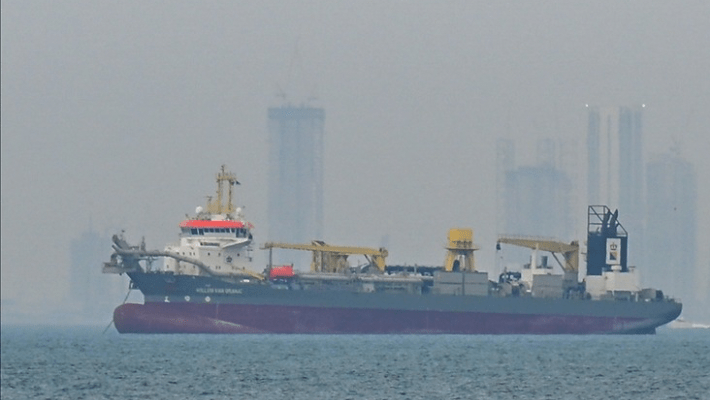
Iran will allow Malaysian vessels to pass through Strait of Hormuz: Prime Minister
Malaysia’s Prime Minister, Anwar Ibrahim, disclosed that Iran will allow Malaysian vessels to pass through the Strait of Hormuz.

States
Nigerian Army retires 18 generals
On Thursday, 18 senior officers of the Nigerian Army Corps of Supply and Transport were pulled out following their retirement after 35 years of meritorious service.


