

Obasanjo urges Africa to develop its own democracy model

Former President Olusegun Obasanjo has urged African countries to develop a democratic model that reflects their history, culture, and developmental realities rather than relying solely on the Western liberal system.
Mr Obasanjo made the call on Tuesday in Bauchi at the 2026 Goodluck Jonathan Foundation (GJF) Democracy Dialogue.
It was themed: “Beyond Elections: Can Political Parties and the Judiciary Alone Save African Democracy?”
He said the democratic model adopted by African countries lacked sufficient African context and often failed to meet the continent’s needs.
“The democracy we practise has no African context. If you try to use what is not meant for you to serve your purpose, it’s like a dress for which you are not measured,” he said.
Mr Obasanjo also questioned the growing role of the judiciary in determining electoral outcomes, saying it could undermine the mandate expressed by voters.
He wondered why the votes of millions of citizens could be overturned or upheld by a small number of judges through electoral litigation.
He also faulted the concept of “loyal opposition” associated with Western democracy, saying the term was poorly understood in many African societies where political opposition was often treated as enmity.
The former president called on African scholars, policymakers and political leaders to develop an inclusive, Afro-centric democratic model that prioritised good governance, equity, public welfare and community representation.
Earlier, former Vice-President Namadi Sambo called for collective commitment to democracy as a means of promoting justice, inclusion, development and dignity.
Mr Sambo said democracy in Africa faced challenges including electoral disputes, political intolerance, weak institutions, corruption, youth unemployment and declining public confidence in governance.
He, however, said the challenges should encourage African countries to improve democratic practice rather than abandon the system.
He called for stronger institutions capable of delivering credible elections, protecting citizens’ rights and ensuring accountable governance.
Mr Sambo also urged political parties to strengthen internal democracy, transparency and accountability, while becoming more focused on policies and programmes that address citizens’ concerns.
He said the selection of candidates should be credible and inclusive, with party members given meaningful opportunities to participate in decision-making.
The former vice-president also urged political parties to move away from personality-driven politics and promote peaceful competition based on ideas and policies.
He said political opponents should not be treated as enemies, adding that democratic differences should be resolved through dialogue and constitutional processes.
Mr Sambo urged political leaders to protect democratic institutions by accepting electoral victories with humility and defeats with dignity, while using lawful channels to challenge disputed outcomes.
He also said the judiciary was a critical pillar of democratic governance, stressing that an independent and impartial judiciary was essential for resolving disputes and protecting citizens’ rights.
According to him, judges must be able to perform their duties without political interference, intimidation or undue pressure.
He, however, said the judiciary must maintain high standards of integrity, professionalism and accountability to sustain public confidence.
Mr Sambo stressed the need for timely resolution of cases, especially electoral disputes, saying delayed justice could undermine confidence in democratic institutions.
He also called for greater participation of young people and women in political processes, noting their significant population across Africa.
(NAN)

We have recently deactivated our website's comment provider in favour of other channels of distribution and commentary. We encourage you to join the conversation on our stories via our Facebook, Twitter and other social media pages.

More from Peoples Gazette

Agriculture
FG tasks ECOWAS on leveraging financing strategies for agroecology
The federal government has urged stakeholders in the agriculture and finance sectors in the West Africa region to leverage financing strategies to enhance agroecology practices

Politics
Katsina youths pledge to deliver over 2 million votes to Atiku
“Katsina State is Atiku’s political base because it is his second home.”

Faith
Kano pilgrims board announces N7 million as 2027 hajj fare
The Kano State Pilgrims Welfare Board has announced N7 million as the final hajj fare for intending pilgrims for the 2027 hajj.

Economy
Refinery: Lawmaker backs West Africa petrol pricing benchmark
Chairman of the House Committee on Petroleum Resources has pledged legislative support for establishing a transparent West African refined fuel pricing benchmark.
Politics
Kebbi to partner NIPSS as Gov Idris promises aid
Governor Nasir Idris has promised to assist the National Institute for Policy and Strategic Studies, Kuru, Jos, in security and cultural heritage matters.

Economy
Anti-corruption: Senate summons Seplat Energy, Network E&P Nigeria, All Grace Energy, Aradel, gives 48-hour deadline
The Senate has issued a 48-hour ultimatum to Seplat Energy, Network E&P Nigeria, All Grace Energy and Aradel Energy to appear before its Public Accounts Committee.
States
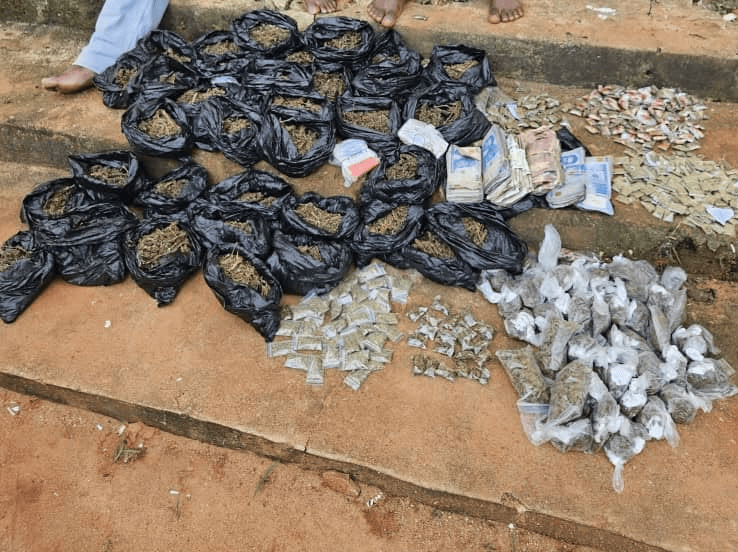
Anambra alleged drug dealers nabbed in Obosi: Police
Police recovered ₦598,400 in cash during the operation carried out by operatives attached to the Rapid Response Squad, Awkuzu.
Politics
Former Supreme Court justice asks political parties to foster internal democracy
Ms Augie also expressed concerns over politicians’ failure to maintain discipline within their ranks and then rely on courts to resolve avoidable crises.


