

Nigeria’s private universities respond faster than govt-owned schools to SGBV cases for reputation sake: Report
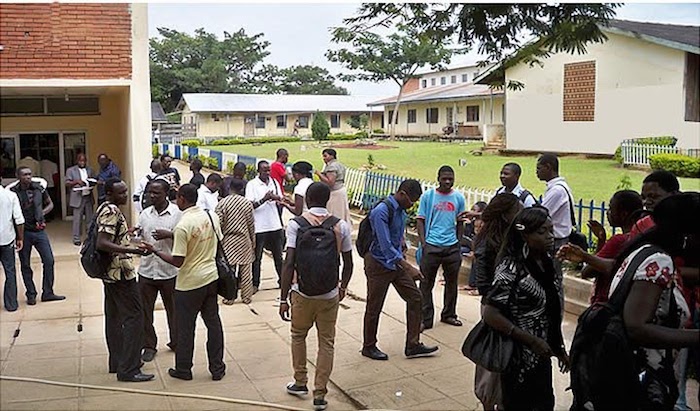
Researchers at the University of Westminster, UK, have revealed in a 2025 report how Nigerian universities respond to sexual and gender-based violence (SGBV), with private institutions acting faster but mainly to protect their reputation.
The report gathered information by interviewing anonymous participants from different schools, including university students, academic staff, non-academic staff and university activists.
The report, by Adrija Dey, Jessica Wild, and Erin Shannon under the femIDEAS study, focused on feminism, intersectionality, decolonisation, equality, abolition and survivors, and showed that private universities often enforce stricter rules and use measures to help prevent abuse.
However, participants said these actions are largely driven by a desire to avoid scandals that could damage the institution’s image or affect student enrolment.
One activist said, “Lecturers make sure that their offices have transparent glass so when a student is inside there you can see from outside in case there is anybody seeking help.”
One student noted that such responses “don’t support the survivors” but instead focus on protecting the school’s name.
Public universities were then described as slower to respond, with participants alleging that staff accused of misconduct are sometimes shielded by colleagues.
The report said this difference is due to funding, student backgrounds, and how each university sets its priorities.
One activist said, “If you look at the public universities, you have mostly children from average homes, but the private schools are very expensive; they don’t want any story that could rubbish the school and make them lose their bottom line.”
The report also noted that poverty significantly influences how SGBV cases are handled in Nigerian universities.
Participants mentioned that students from less privileged backgrounds often struggle to report abuse or get justice, while those from wealthy families are more likely to be heard.
Some institutions were accused by participants of protecting alleged culprits who are from rich backgrounds, allowing them to escape being held accountable.
One student said cases involving “big” individuals rarely follow proper procedures, while another noted that victims without financial backing are often ignored.
The report also noted that homophobia shapes responses to SGBV, particularly for LGBTQ+ students.
The report noted that Nigeria’s Same Sex Marriage (Prohibition) Act, which criminalises same-sex relationships and related associations, makes people afraid to report abuse.
Participants said victims risk being labelled, stigmatised, or even criminalised if they come forward, especially in cases involving same-sex harassment.
According to the report, this environment contributes to victim-blaming, where some victims are said to be responsible for the abuse they experience.
In extreme cases, victims may be threatened with being labelled gay or lesbian as a way to silence them, further discouraging reporting.
Researchers said this limits access to support and deepens the marginalisation of vulnerable groups within university communities.
The report also noted that support systems for victims are not enough across many institutions.
Where counselling is available, it is limited and sometimes based on religious guidance rather than professional care.
Victims in some cases were reportedly encouraged to “forgive and forget,” thereby silencing victims.
The report concluded that while some private universities respond to SGBV better, both private and public universities in Nigeria lack effective systems to prevent and address sexual violence.

We have recently deactivated our website's comment provider in favour of other channels of distribution and commentary. We encourage you to join the conversation on our stories via our Facebook, Twitter and other social media pages.

More from Peoples Gazette

Agriculture
FG tasks ECOWAS on leveraging financing strategies for agroecology
The federal government has urged stakeholders in the agriculture and finance sectors in the West Africa region to leverage financing strategies to enhance agroecology practices

Politics
Katsina youths pledge to deliver over 2 million votes to Atiku
“Katsina State is Atiku’s political base because it is his second home.”
Anti-Corruption
Trump moves to denaturalise Oluwatosin Kazeem for stealing $12 million despite Biden’s commutation
Kazeem also attempted to use his ill-gotten funds to develop a $6 million, four-star hotel in Lagos, Nigeria, the Justice Department said in a statement on Wednesday.

States
IPOB/ESN’s terror camp ‘Mother Valley’ raided, two killed, 300 IEDs seized in Imo: Police
The police command says it overran the IPOB/ESN terrorists’ camp, known as ‘Mother Valley’, killing two and recovering over 300 improvised explosive devices.

Africa
Tinubu to meet British PM Starmer today over worsening terrorism in Sahel
“Our West African region faces complex terrorism challenges with roots in the Sahel,” Mr Tinubu said.

Economy
About N1 trillion in investors’ wealth wiped out at Nigeria’s stock market
The Nigerian stock market closed the week on a negative note on Wednesday, wiping out N900 billion in investors’ wealth after four consecutive days of gains.
Health
Five million children in Nigeria, other nations still die annually before fifth birthday: UN
According to the UN report, deaths remain concentrated in a handful of endemic countries—such as Chad, Democratic Republic of the Congo, Niger, and Nigeria.

Rights
FG seeks stronger PPP to drive reforms across correctional centres
The federal government has called for stronger public-private partnerships to drive sustainable reforms across correctional centres.


