

Nigeria’s Olufemi Elias says he’s most qualified candidate for ICJ seat

Nigeria’s candidate for the International Court of Justice at The Hague, Olufemi Elias, says he is the most qualified to contest for the seat.
Mr Elias said in New York that his profile stood out from among all the candidates. According to him, my profile ticks all the boxes.
The ICJ is one of the six principal organs of the United Nations, established in 1945 after World War II, to settle disputes between states in accordance with international law.
The election will fill the vacant seat left by Judge Abulqawi Yusuf for the rest of his term, which will expire in February 2027.
“I started as an academic, spent 20 years at the UN, and rose to the level of Assistant Secretary-General. Right now, I serve in various judicial capacities, including as Judge Ad Hoc of the ICJ itself.
“My distinguished competitors are professors of international law. So they have that academic heft, but we all have that. I’m saying my candidature has that (as an academic) but also a knowledge of the workings of the multilateral system in which the court operates and the actual judicial experience,” Mr Elias said.
According to him, his competitors lack both knowledge of the workings of the multilateral system and actual judicial experience.
Candidates nominated for the vacant seat include Mr Elias, Charles Jalloh, and Phoebe Okowa. The election will take place simultaneously in the UN General Assembly and the Security Council.
The Nigerian government has been canvassing delegates’ support for Mr Elias, and several events have been organised to promote his candidacy.
The World Court has a panel of 15 judges elected by the UN General Assembly and Security Council for nine-year terms. An election for a seat at the Court is expected to be held in 2026.
His father, Taslim Elias, who helped draft Nigeria’s first constitution, was President and Judge at the ICJ, chief justice and attorney general of Nigeria, who in 1949, became the first African to earn a Ph.D in law from the University of London, and in 1982, rose to become the first African to be the president of the ICJ.
If elected, Mr Elias, who is also the secretary-general of the African Association of International Law, will be the fourth Nigerian to sit at the ICJ, after Charles Onyeama, Bola Ajibola, and Taslim Elias, and since 1994, when Nigeria last had a presence at the Court.
(NAN)

We have recently deactivated our website's comment provider in favour of other channels of distribution and commentary. We encourage you to join the conversation on our stories via our Facebook, Twitter and other social media pages.


More from Peoples Gazette

Agriculture
FG tasks ECOWAS on leveraging financing strategies for agroecology
The federal government has urged stakeholders in the agriculture and finance sectors in the West Africa region to leverage financing strategies to enhance agroecology practices

Politics
Katsina youths pledge to deliver over 2 million votes to Atiku
“Katsina State is Atiku’s political base because it is his second home.”

Sport
2026 World Cup: Super Eagles begin African playoff journey amid protest over payment
The tournament is scheduled for Mexico in March 2026.

Heading 5
Kaduna has aligned with Renewed Hope Agenda: Uba Sani
The governor said the impact of the Renewed Hope Agenda is steadily unfolding across the sectors of the economy and the nation’s socio-political landscape.

Africa
Situation in Sudan’s North Darfur state remains volatile: UN
Mr Fletcher plans to press for stopping the atrocities in the Kordofan and Darfur regions.

Heading 4
Gov. Mutfwang presents N914.8 billion 2026 budget to Plateau assembly
Mr Daniel commended the governor for presenting the budget within record time.

Heading 2
Osun cocoa traders decry alleged produce theft, shady deals by non-members
Mr Olawuyi said the association had also noticed that substandard cocoa beans were being traded in the market.
States
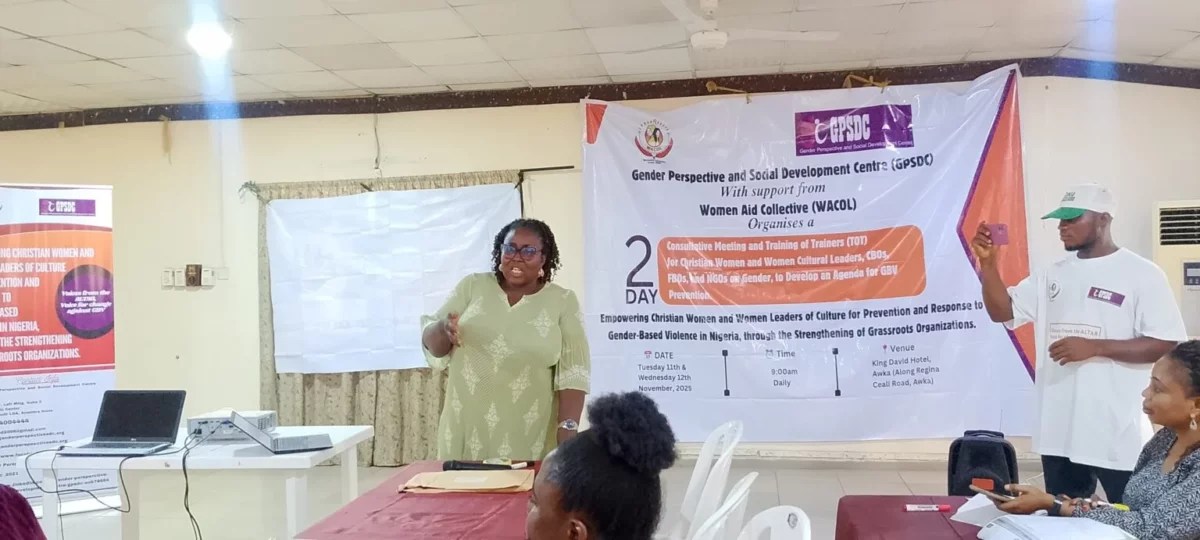
Lack of data, shelter for survivors responsible for rising gender-based violence in Anambra: Group
Mr Anekwe stated, “Without GBV data, policymakers cannot gauge the scale of abuse, allocate resources effectively, or design interventions.’’


