

Nigerians warned against spreading Ebola misinformation
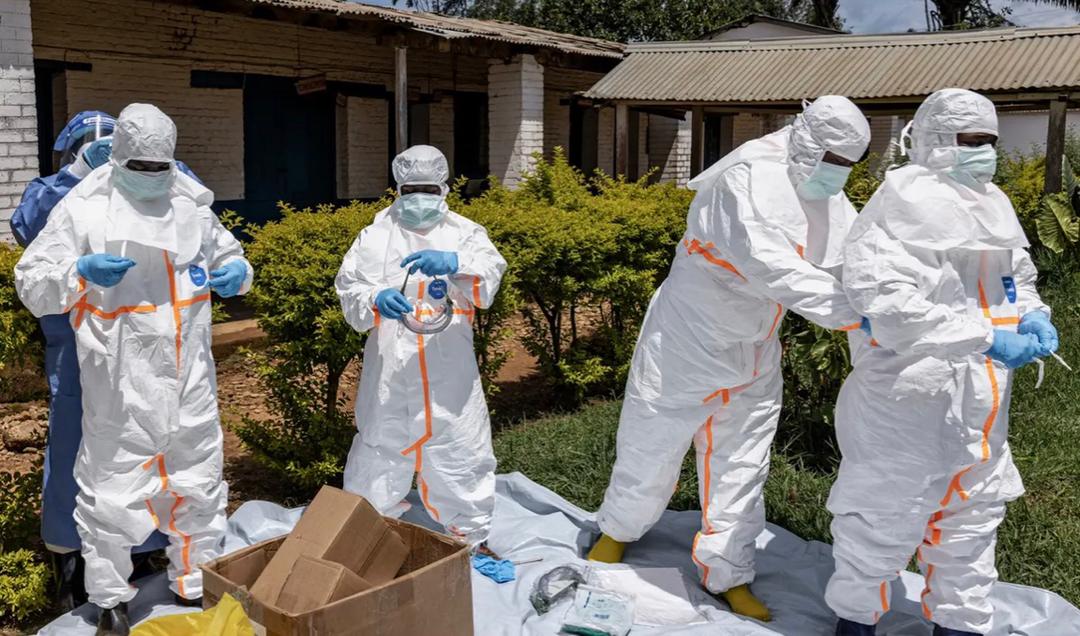
Public health experts have warned Nigerians against spreading misinformation about the Ebola virus disease, saying false claims could fuel panic and undermine disease control efforts.
The experts gave the warning during the monthly X-Space webinar organised by Orodata Science.
The webinar was titled ‘Tracking Outbreaks: How Data and Facts Keep Us Safe from Ebola Rumours’.
A health educator, Ayomide Alebiowu, described misinformation as one of the greatest public health threats during disease outbreaks because it fuels fear, panic and dangerous behaviour.
He urged Nigerians to verify every health-related message before sharing it and report false information to the appropriate authorities.
“Before you forward a message, verify its authenticity from the right sources and report any misinformation. People should always share information that has an identifiable source,” he said.
Mr Alebiowu advised the public to treat anonymous messages beginning with phrases such as “a doctor said” or “my friend working in a hospital said” with suspicion.
“If a message has no identifiable source, that is a red flag. When a message says ‘share to save lives’, stop and verify it first. Never circulate information simply because someone forwarded it,” he said.
According to him, misinformation often spreads faster than verified information, which can cause widespread panic during disease outbreaks.
Mr Alebiowu said Ebola is a severe viral disease with six known strains, noting that the strain currently circulating in the Democratic Republic of Congo differs from the Zaire strain responsible for Nigeria’s 2014 outbreak.
He said there was currently no cure for the circulating strain, while research on vaccines for other variants was ongoing.
The health educator said Ebola’s early symptoms, including fever, headache, sore throat, muscle and joint pain, and body weakness, closely resemble those of malaria and typhoid fever, making early diagnosis difficult.
“Immediately you notice the first signs, go and get checked. Do not assume it is malaria and begin self-medication,” he advised.
Mr Alebiowu reiterated that Ebola spreads through direct contact with the body fluids of an infected person and is neither airborne nor transmitted by mosquitoes.
He urged Nigerians to obtain health information only from recognised institutions such as the Nigeria Centre for Disease Control and Prevention, the World Health Organisation and Doctors Without Borders.
“We must understand how information moves because wrong information can become an epidemic on its own,” he said.
Reflecting on Nigeria’s response to the 2014 Ebola outbreak, Mr Alebiowu attributed the country’s success to coordinated surveillance, contact tracing, laboratory testing, prompt isolation of suspected cases and effective public communication.
“We monitored almost 900 contacts across three states and recorded only about 20 confirmed cases. That shows the level of work that went into containing the outbreak,” he said.
He added that Nigeria’s disease surveillance and emergency response capacity had improved significantly over the past decade.
“I won’t say Nigeria is 100 per cent ready. I will say we are above 60 per cent prepared and on alert,” he said.
Also speaking, a registered nurse, Lilian Amaka, said health workers were battling not only infectious diseases but also the harmful effects of misinformation.
She said nurses frequently encountered patients who believed false claims circulated on social media and messaging platforms.
Ms Amaka recalled misconceptions about HIV transmission and the false belief during the 2014 Ebola outbreak that drinking or bathing with salt water could prevent infection.
She said some people reportedly died after consuming excessive quantities of salt water during the panic.
“The greatest challenge is helping people distinguish facts from rumours. People must verify information before sharing it,” she said.
Ms Amaka urged Nigerians to disregard health messages without identifiable authors or official endorsements, especially those promoting home remedies prepared from common kitchen ingredients.
She also commended Nigerian hospitals for strengthening screening procedures during the 2014 Ebola outbreak through temperature checks, isolation of suspected cases and prompt laboratory testing.
The experts urged Nigerians to remain vigilant without panicking, stressing that early reporting of symptoms, reliance on verified information and responsible sharing of health messages remain the country’s strongest defence against Ebola and other infectious diseases.
Nigeria recorded its first Ebola case in July 2014 after an infected traveller from Liberia arrived in Lagos.
Aggressive contact tracing, surveillance, laboratory testing, case management and coordinated public health interventions enabled the country to contain the outbreak within months.
The country’s response has since been recognised internationally as one of Africa’s most successful infectious disease containment efforts.
(NAN)

We have recently deactivated our website's comment provider in favour of other channels of distribution and commentary. We encourage you to join the conversation on our stories via our Facebook, Twitter and other social media pages.

More from Peoples Gazette

Agriculture
FG tasks ECOWAS on leveraging financing strategies for agroecology
The federal government has urged stakeholders in the agriculture and finance sectors in the West Africa region to leverage financing strategies to enhance agroecology practices

Politics
Katsina youths pledge to deliver over 2 million votes to Atiku
“Katsina State is Atiku’s political base because it is his second home.”

Abuja
Abuja driver to die by hanging for killing octogenarian boss, wife
Justice Idris Mohammed held that based on the evidence before the court, Markus committed the crime.
Africa
Nigeria reaffirms commitment to advancing democracy, regional prosperity
Nigeria has reaffirmed its commitment to strengthening its longstanding partnership with the United Nations in advancing sustainable, democratic governance and regional prosperity.

States
Anambra CP tasks officers on professional conduct
The CP enjoined the officers to remain courageous and committed to their constitutional responsibilities.

Health
OAUTHC CMD advocates increased investment in paediatric cardiac services
The chief medical director of the Obafemi Awolowo University Teaching Hospital Complex, Ile-Ife, has called for more investment in paediatric cardiac services.

States
NSCDC appoints new state commandant for Adamawa
The Nigeria Security and Civil Defence Corps has appointed Nasiru Saleh as the 16th commandant in Adamawa.

World
Spain records over 1,000 heat-related deaths in June
The Carlos III Health Institute in Madrid, Spain, said 1,028 people in the country died from heat-related causes during the heatwave that hit Europe.


