
NACA seeks sustainable financing to safeguard Nigeria’s HIV response
The National Agency for the Control of AIDS (NACA) has called for sustainable financing and stronger domestic resource mobilisation to safeguard Nigeria’s HIV response amid declining global development assistance.
The Director-General of NACA, Temitope Ilori, made the call during the Nigeria Event at the 26th International AIDS Conference (IAS 2026) in Rio de Janeiro, Brazil, themed: “Rethink. Rebuild. Rise.”
Ms Ilori said the theme aligned with Nigeria’s commitment to building a more resilient, self-reliant and sustainable HIV programme, hence Nigeria’s sub-theme, “Sustainability: Strengthening Resource Mobilisation for the National HIV Response in Nigeria.”
She said that the future of Nigeria’s HIV response would depend not only on scientific breakthroughs and effective interventions but also on establishing resilient financing systems capable of withstanding evolving global economic realities.
“The future of the HIV response depends not only on scientific breakthroughs and effective interventions.
“It also depends on our collective ability to build resilient, sustainable financing systems that can withstand evolving global economic realities,” she said.
The NACA boss acknowledged the progress Nigeria had made over the last two decades through partnerships involving the federal government, development partners, civil society organisations, communities of people living with HIV, and the private sector.
According to her, the collaborations have significantly expanded HIV prevention, treatment, care and support services, leading to improved health outcomes for millions of Nigerians.
She, however, warned that the global financing landscape was changing as development assistance continued to decline while competing national and global priorities placed increasing pressure on available resources.
“This changing environment presents both a challenge and an opportunity. It calls on us to reimagine how we finance the HIV response and accelerate our transition toward greater domestic ownership and sustainability,” she said.
The DG stressed that sustainability went beyond replacing donor funding, noting that it also required stronger institutions, improved governance, greater efficiency, innovation, and expanded partnerships.
“Sustainability is not simply about replacing donor funding.
“It is about building stronger institutions, strengthening governance, improving efficiency, leveraging innovation, expanding partnerships, and ensuring that every available resource delivers maximum impact,” she said.
She described the dialogue as an opportunity to deepen collaboration, identify practical solutions, and forge stronger partnerships that would shape the future of Nigeria’s HIV response.
The NACA boss also announced that the agency would convene a Post-IAS Stakeholders’ Engagement Meeting after the conference to review lessons, innovations, policy directions, scientific advances, and best practices from IAS 2026.
According to her, the meeting would focus on translating the outcomes of the conference into practical and specific actions for Nigeria’s HIV response.
In his remarks, Basil Okolo, Charge d’Affaires of the Federal Republic of Nigeria to Brazil, said the event came at a significant period when Nigeria and Brazil had entered a renewed phase of strategic partnership.
Okolo said recent high-level bilateral engagements had reaffirmed both countries’ commitment to expanding cooperation across critical sectors, particularly health.
He said the renewed partnership reflected the confidence of both nations in South-South cooperation as a catalyst for sustainable development and improved health outcomes.
According to him, health has emerged as a strategic pillar of the renewed cooperation, creating opportunities for knowledge exchange, local manufacturing of health commodities, research collaboration, regulatory strengthening, and health systems innovation.
“We recognise that no country can achieve these ambitions in isolation.
“Success will depend on stronger partnerships among governments, development partners, academia, civil society, communities and the private sector,” Mr Okolo said.
He commended development partners for their continued support and expressed optimism that the conference would strengthen collaboration toward achieving sustainable health outcomes.
(NAN)

We have recently deactivated our website's comment provider in favour of other channels of distribution and commentary. We encourage you to join the conversation on our stories via our Facebook, Twitter and other social media pages.

More from Peoples Gazette

Agriculture
FG tasks ECOWAS on leveraging financing strategies for agroecology
The federal government has urged stakeholders in the agriculture and finance sectors in the West Africa region to leverage financing strategies to enhance agroecology practices

Politics
Katsina youths pledge to deliver over 2 million votes to Atiku
“Katsina State is Atiku’s political base because it is his second home.”

Anti-Corruption
Campus Eye CEO Bruce DiDonato charged with multimillion-dollar Medicare fraud
Mr DiDonato was indicted on one count of conspiracy to commit health care fraud and two substantive counts of health care fraud.

Africa
South Africans can’t march forever, says anti-migrant campaigner Mchunu, hints at economic collapse
The anti-migrant activist highlighted that South Africans have staged over 1,000 marches against illegal immigrants.

Economy
Nigeria should rely more on domestic capital, says CBN governor
“The era of abundant liquidity, chasing returns regardless of risk, is over. Investors now have more choices and less tolerance for uncertainty,” said Mr Cardoso.

Abuja
U.S. discontinues routine visa services in Abuja, 24 other African cities
The U.S. government says routine visa services in Abuja and 24 other African cities will end on August 1.
Africa
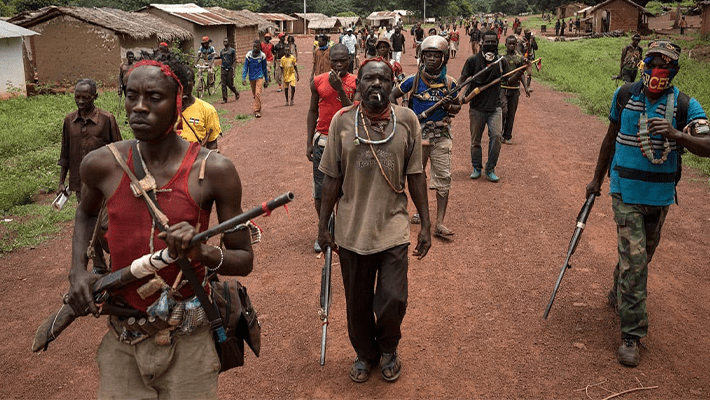
UN Security Council renews sanctions against Central African Republic entities
The Security Council on Wednesday extended for a year the sanctions against non-state armed groups and other individuals undermining peace in the Central African Republic.
Economy
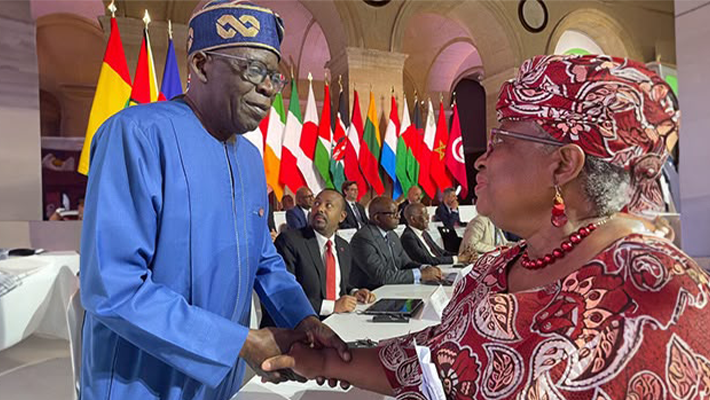
Okonjo-Iweala tells Tinubu to borrow cautiously, reforms should create jobs for Nigerians
“Nigeria needs to continue the work on overall macroeconomic reforms with a careful approach to fiscal issues, contracting of debt and debt management,” the WTO chief stated.


