
Kidnapping, banditry, terrorism jointly driving insecurity in Nigeria, West Africa, says scholar

The Chief Executive Officer of Sundiata Post, Dr Max Amuchie, says insecurity in Nigeria and West Africa should be viewed as an interlocking system where kidnapping, banditry, and terrorism reinforce one another.
Mr Amuchie said this in his Sunday Stew titled, “The Insecurity Triad: Money, Land, and Mind — A Definitive Articulation.”
ArticulatIng the insecurity triad, an original analytical framework explaining the structure of insecurity in Nigeria and West Africa, he said that it should no longer be viewed as isolated crises.
He defined the triad through three linked domains of rival power: Money, Land, and Mind.
According to the framework, kidnapping represents authority over persons through ransom economies; banditry represents authority over territory and productive life; while terrorism represents authority over belief and ideological order.
“Taken together, these forces do not merely exploit state weakness, they constitute a shadow order that competes with formal sovereignty,” he said.
Mr Amuchie described the triad as a distinct explanatory construct rooted in African realities, challenging approaches that treat kidnapping, banditry, and terrorism as separate phenomena.
The work draws on African scholarship from Ali Mazrui, Claude Ake, Jean-François Bayart, William Reno, and Achille Mbembe to trace insecurity from post-colonial state weakness to parallel systems of coercion and control.
He stated, “This is not an imported or adapted theory, it is an original analytical construction… grounded in five pillars of African scholarship and tested against the realities of a fracturing state.”
The article also introduced the “Trinity of State Decay” as a wider macro-diagnostic lens explaining how the “Administrative Mirage” and the “Shadow Order” interact to make the triad possible.
The publication is expected to provide new vocabulary for journalists, scholars, policymakers, and citizens seeking to understand how various forms of violence connect across Nigeria and the region.
(NAN)

We have recently deactivated our website's comment provider in favour of other channels of distribution and commentary. We encourage you to join the conversation on our stories via our Facebook, Twitter and other social media pages.

More from Peoples Gazette

Agriculture
FG tasks ECOWAS on leveraging financing strategies for agroecology
The federal government has urged stakeholders in the agriculture and finance sectors in the West Africa region to leverage financing strategies to enhance agroecology practices

Politics
Katsina youths pledge to deliver over 2 million votes to Atiku
“Katsina State is Atiku’s political base because it is his second home.”
Showbiz
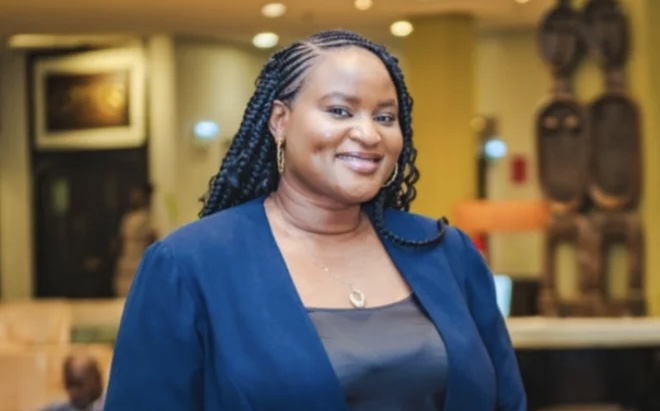
Filmmaker seeks ethical, psychology-driven storytelling
Ms Komolafe made the call in an interview on Sunday in Lagos. She noted that filmmakers wield enormous power to shape public perception.

States
NAFDAC warns Nigerians about fake, hazardous Colgate toothpaste
The shop owner informed the team that the products were purchased from a door-to-door sales representative, but no proof of purchase was provided.
States
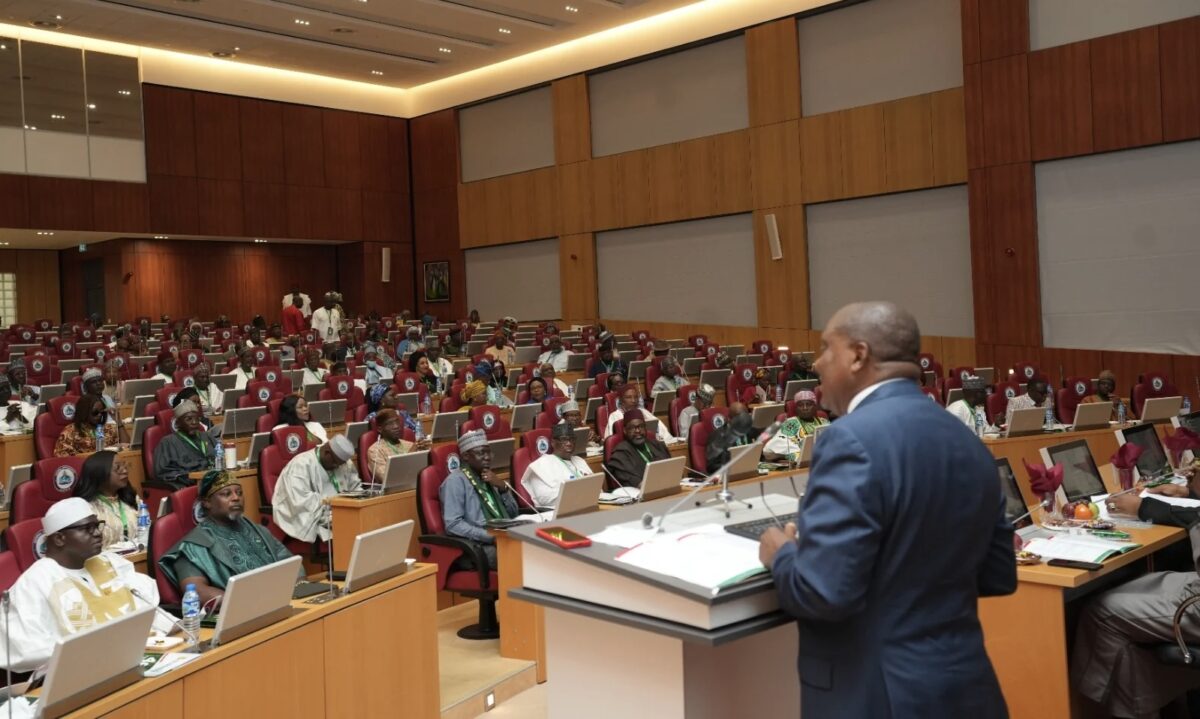
Renewed call made for urgent establishment of state police in Northern Nigeria
The AANI observed that the current centralised policing framework under the police is overstretched, with about 371,800 personnel serving a population of over 200 million.
Rights
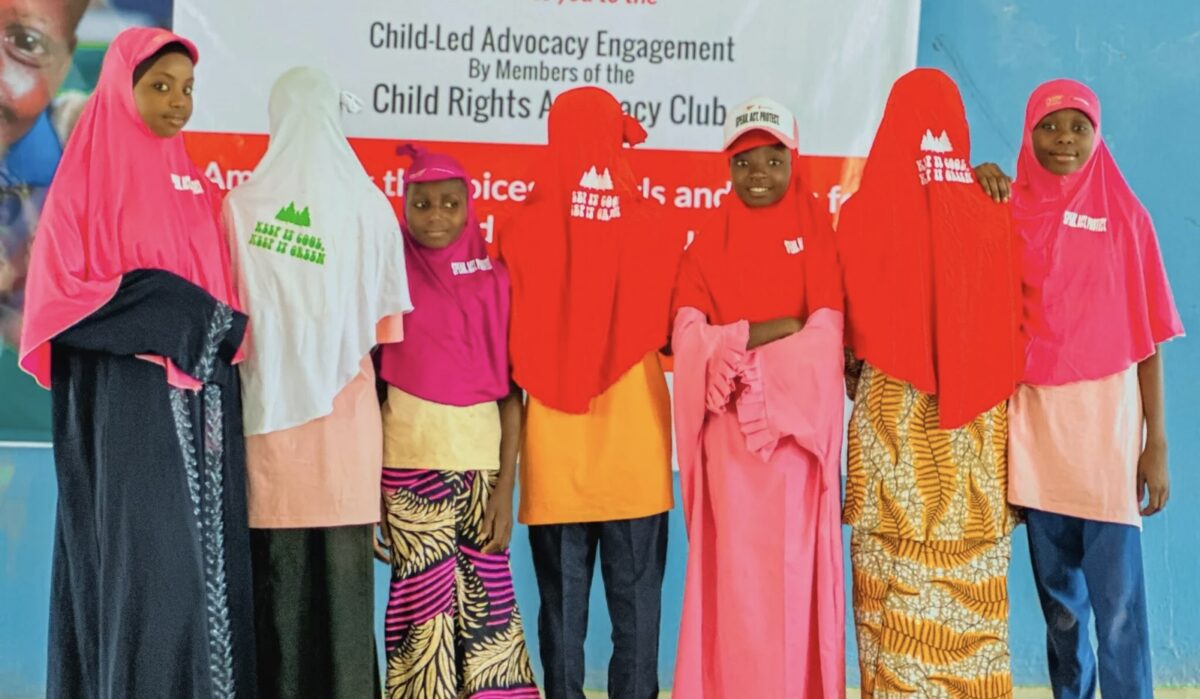
Katsina children raise alarm over climate-linked school hazards
Children from the Child Rights Advocacy Club in the Mashi council area of Katsina have raised serious concerns about worsening climate-related and environmental conditions.

Abuja
Nigeria, South Africa navies deepen maritime ties at maiden staff talks
The Nigerian Navy and the South African Navy have concluded their maiden Naval Staff Talks, aimed at strengthening bilateral cooperation and enhancing maritime security.

Economy
BPP targets women, youths in new procurement policy
BPP has introduced an affirmative procurement system to promote inclusion and economic participation among women, youths and persons with disabilities.


