

Kano residents express relief over improved supply, fall in cooking gas prices

A gradual return of cooking gas supply in Kano has brought relief to many households after weeks of scarcity and soaring prices that forced several families to seek alternative cooking methods.
A market survey conducted across the Sabon Gari, Tarauni, Hausawa, and Rijiyar Zaki areas showed that a kilogramme of LPG, which previously sold between ₦1,800 and ₦2,000, now costs between ₦1,350 and ₦1,500, depending on the location.
A resident of Sabon Gari in Fagge Local Government Area, Angela Okon, said the last few weeks have been challenging.
“There was a time I paid ₦6,000 to refill my small 3kg cylinder. It was heartbreaking because that used to cost just about ₦3,000 a few months ago,” she lamented.
She expressed relief that prices had begun to ease, adding, “Even though ₦1,400 per kilogramme is still high, at least gas is available now.
Similarly, Sani Buhari, a resident of Darmanawa Quarters in Tarauni Local Government Area, said his family had to ration cooking time during the height of the scarcity.
He said, “We were buying at ₦2,100 per kilogramme at one point. My wife even switched to charcoal for a while. The queues were frustrating.
“Now, I can refill my cylinder easily, and the price has dropped to around ₦1,400. I just hope it stays that way.”
At Rijiyar Zaki, Abubakar Musa, a civil servant, recalled how the shortage affected daily life.
He said, “I’ve never seen people line up for gas before. Some stations were opening only twice a week.
“Many families started cooking with firewood again. You can imagine the stress and smoke. We thank God that gas is returning to the market.”
A dealer, Aminu Halilu, who manages a depot, said the scarcity was caused by disruptions in the supply chain.
“Some depots in Lagos and Port Harcourt had no product, and transportation costs went up because of strikes among tanker drivers,” he explained.
“Now, supply is gradually stabilising. The last consignment we received allowed us to sell at between ₦1,350 and ₦1,450 per kilogramme. Customers are coming back, but everyone is still cautious,” he added.
He, however, urged the government to address logistics bottlenecks and support local gas production to ensure a steady supply and price stability.
(NAN)

We have recently deactivated our website's comment provider in favour of other channels of distribution and commentary. We encourage you to join the conversation on our stories via our Facebook, Twitter and other social media pages.


More from Peoples Gazette

Agriculture
FG tasks ECOWAS on leveraging financing strategies for agroecology
The federal government has urged stakeholders in the agriculture and finance sectors in the West Africa region to leverage financing strategies to enhance agroecology practices

Politics
Katsina youths pledge to deliver over 2 million votes to Atiku
“Katsina State is Atiku’s political base because it is his second home.”

States
FG expresses displeasure over slow work on Lambata–Lapai–Bida highway, demands urgent progress
Mr Ahmed urged motorists, especially truck drivers, to ply the road patiently.
States
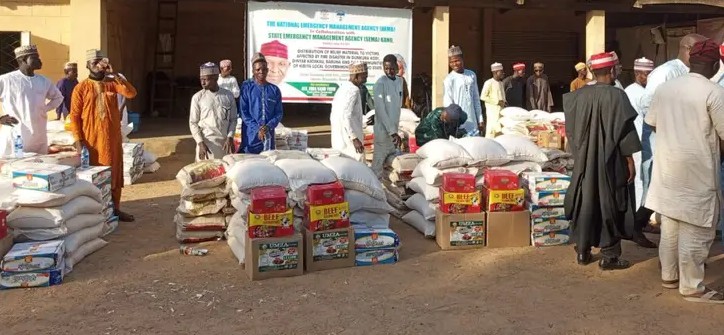
Kano govt, NEMA distribute relief materials to 357 fire disaster victims
He said the gesture would go a long way in alleviating the suffering of the victims.

States
Army headquarters assesses troops’ readiness in fight against insecurity in North-West
The visit was part of ongoing efforts to evaluate troops’ readiness and operational effectiveness in the fight against insecurity.

Heading 1
ADC inaugurates new state executives in Adamawa
Mr Abbo expressed confidence that the ADC would perform strongly in the 2027 general elections.

States
Kogi govt distributes veterinary equipment, motorcycles to boost livestock production
Mr Bolarin said the initiative underscored Governor Ahmed Ododo’s administration’s commitment to transforming the state’s agricultural landscape.

Politics
Abia: Mascot Kalu declares 2027 governorship bid, pledges equity, transparency in governance
Mr Kalu pledged to build a government that works for all Abia people, especially the underserved at the grassroots level.


