
IMF lowers global growth forecasts amid Middle East war

The International Monetary Fund expects global economic growth to be slightly weaker than previously forecast, warning that rising geopolitical tensions and energy disruptions are weighing on activity.
“Once again, the global economy is threatened with being thrown off course—this time by the outbreak of war in the Middle East at the end of February 2026,” the IMF said on Tuesday in its latest outlook.
Whereas last year it was “higher trade barriers and elevated uncertainty”, the IMF said—likely referring to U.S. President Donald Trump’s tariff policy—the current situation is being weighed down by the slump in the supply of raw materials resulting from the blockage of the vital Strait of Hormuz and the uncertainty caused by the war with Iran.
The fund revised down forecasts for many economies, noting that its projections assume the conflict remains limited and that economic disruptions ease by mid-2026.
The IMF now expects global growth of 3.1 per cent in 2026, down from 3.3 per cent forecast in January, and 3.2 per cent in 2027.
This would leave global growth below its long-term average.
IMF managing director Kristalina Georgieva had warned that even in a best-case scenario, there will be no quick return to pre-war growth levels, with expansion likely to remain structurally weaker.
Economic growth is therefore likely to stabilise at this new level in the medium term, and thus lie well below the average of 3.7 per cent between 2000 and 2019.
The IMF chief also highlighted the short-term risks of a surge in inflation resulting from the war.
Expectations for inflation in the United States and the eurozone have already risen significantly.
“Fortunately, longer-run expectations have not budged – this is very good and very important,” Ms Georgieva said.
Global headline inflation is expected to stand at 4.4 per cent in 2026 and fall to 3.7 per cent next year. This would place the figures well above the 2 per cent target that many central banks have set themselves.
Ms Georgieva did not yet see central banks such as the Federal Reserve or the European Central Bank under pressure to act.
The IMF now forecasts eurozone growth of 1.1 per cent this year (January: 1.3 per cent) and 1.2 per cent in 2027, down from a previous estimate of 1.4 per cent.
The fund also adopted a more cautious outlook for the U.S., projecting growth of 2.3 per cent in 2026 (January: 2.4 per cent). For 2027, growth is seen at 2.1 per cent, slightly above the earlier forecast of 2 per cent.
For Germany, this meant another downward revision just three months after the most recent upward revision. The German economy is now expected to grow by 0.8 per cent in 2026.
As recently as January, economic experts had raised their expectations to 1.1 per cent.
The German government is also likely to follow suit and scale back its expectations in the near future: so far, Berlin is forecasting growth of 1 per cent this year.
The spring forecast forms the basis for the tax estimate. Leading economic institutes have already cut their outlook to as low as 0.6 per cent. Economists say higher energy prices are weighing heavily on the recovery.
Supply disruptions linked to the Strait of Hormuz have driven up global oil and gas prices, pushing fuel costs higher.
In response, Germany’s coalition government has announced temporary tax cuts on fuel, reducing petrol and diesel prices by about 17 cents per litre for two months.
Workers may also receive a tax-free €1,000 bonus from employers.
(dpa/NAN)

We have recently deactivated our website's comment provider in favour of other channels of distribution and commentary. We encourage you to join the conversation on our stories via our Facebook, Twitter and other social media pages.

More from Peoples Gazette

Agriculture
FG tasks ECOWAS on leveraging financing strategies for agroecology
The federal government has urged stakeholders in the agriculture and finance sectors in the West Africa region to leverage financing strategies to enhance agroecology practices

Politics
Katsina youths pledge to deliver over 2 million votes to Atiku
“Katsina State is Atiku’s political base because it is his second home.”
Rights
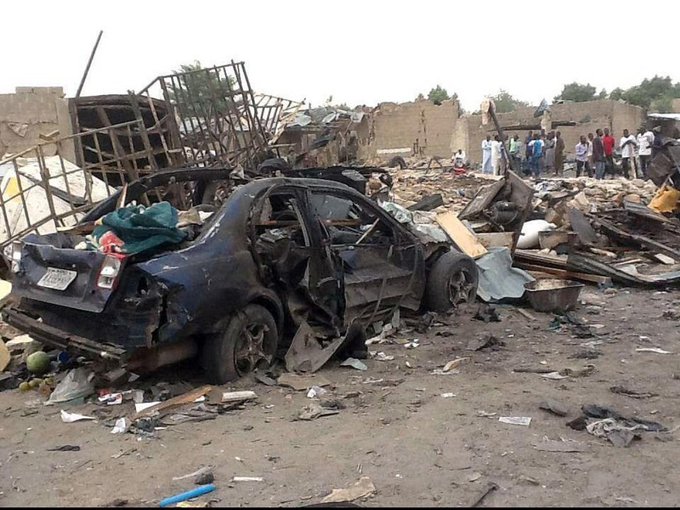
Jilli market bombing by air force deliberate airstrike not mistake: Tinubu Govt
“The federal government reiterates that this was a deliberate, intelligence-led operation, not an indiscriminate attack,” said the information minister.
Economy
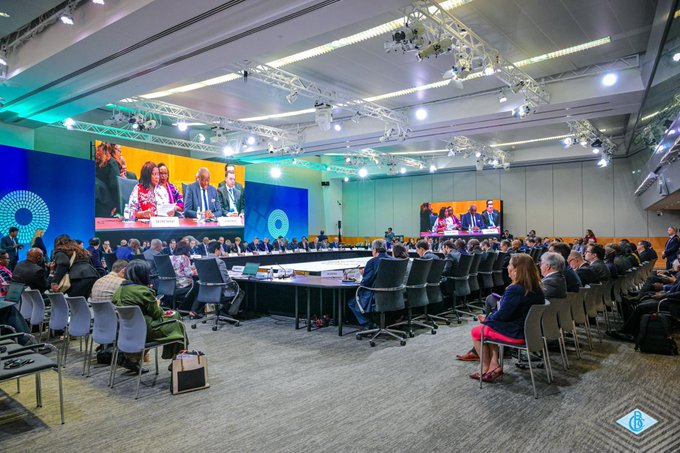
Nigeria to collaborate with G24 countries to strengthen advocacy: Wale Edun
Mr Edun said this during the G24 meeting at the International Monetary Fund/World Bank Group spring meetings in Washington on Tuesday.

Abuja
ADC Convention: Atiku, Amaechi, Obi harp on unity, viable presidential candidate
Leaders of the African Democratic Congress have stressed the need for unity and the adoption of a credible candidate for the 2027 presidential election.
Heading 2
IMF lowers global growth forecasts amid Middle East war
“Once again, the global economy is threatened with being thrown off course—this time by the outbreak of war in the Middle East,” the IMF said.

Economy
Oil price gains not enough to save Nigeria’s economy from global shock: IMF
The IMF’s economic counsellor and director of research, Pierre-Olivier Gourinchas, said this at the ongoing IMF/World Bank Spring Meetings in Washington, D.C. on Tuesday.
Politics
ADC expels Nafiu Bala, others for alleged anti-party activities
The African Democratic Congress has expelled Nafiu Bala and others from the party, citing alleged anti-party activities.


