

Health campaigners seek ban on mercury-based dentistry
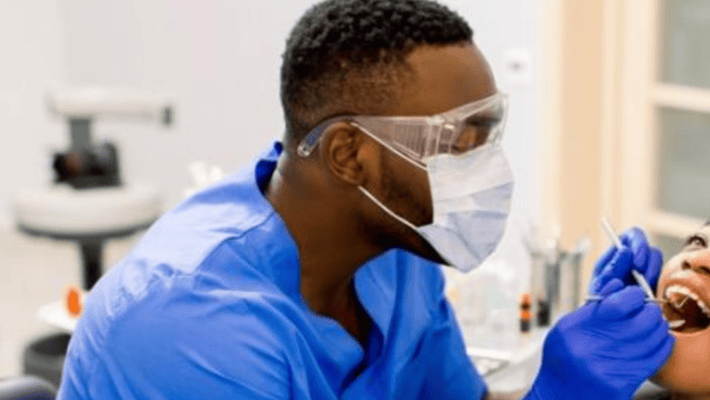
As campaigns to phase out mercury-based dentistry in Africa continue to gain momentum, campaigners have urged the Nigerian government to implement the national action plan (NAP) for mercury-free dentistry nationwide.
Campaigners from various countries, in a Zoom meeting, gave an overview of steps taken by their governments, noting that most African countries, including Tanzania, Gabon and Cameroon, have phased out mercury-based dentistry.
Mercury is a neurotoxin and can damage children’s developing brains and nervous systems even before they are born.
Dental amalgam fillings are 50 per cent mercury, a major neurotoxin.
The restriction of its use was demanded worldwide in the Minamata Convention on Mercury, adopted by more than 140 governments, including Nigeria, in Kumamoto, Japan.
The theme of COP1 was to “make mercury history”, showing the international will to deal with mercury, including dental amalgam.
Since then, after so many debates and advocacy at COP1 in 2017 and COP2 in 2018, an amendment to the Convention was proposed, calling for a set of dates to achieve a phase-out of dental amalgam by 2024.
In May 2014, the regional workshop held in Abuja, involving 40 NGOs from across Africa, declared that Africa would be the first continent to phase out amalgam.
Subsequently, the draft of the national policy on the phase-down of dental amalgam has been finalised and submitted to the Federal Ministry of Health for adoption by national stakeholders.
The Nigeria Dental Association’s (NDA) current position is to phase out dental amalgam use in vulnerable groups (children, pregnant and lactating women) by December 3, 2025, and for the entire population by December 31, 2030.
Speaking, the president of the World Alliance for Mercury-Free Dentistry, Charlie Brown, a barrister, said it was 10 years since the convention and campaign’s flagship, and that the government had yet to implement its policy document.
Mr Brown explained that during the 2014 Abuja Declaration, a foundational commitment by African civil society groups to end the use of mercury in dentistry was made.
He reiterated that the draft of the national policy on the phase-down of dental amalgam has been finalised and submitted to the Federal Ministry of Health for adoption by national stakeholders.
According to him, it has become imperative to phase out mercury-based dentistry entirely, given its inherent health implications.
Highlighting some of the health hazards, Mr Brown said that mercury-laden fillings can cause brain damage in children and other health issues such as nerve damage, headaches, and kidney problems.
“About 140 governments of the world are involved in the campaign for mercury-free dentistry, in which most of the African countries, like Cameroon, Gabon and Tanzania, among others, have phased it out.
“Our target is for every country to phase out mercury-based dentistry by 2030.
“From now, 2026 to 2030 is nowhere far; let the Nigerian government expedite efforts to implement the national policy document for mercury-free dentistry as has been done in many African countries,” he said.
Shedding more light, Mr Brown emphasised the need for direction on the national policy for mercury-free dentistry through the office of the Federal Ministry of Health and the Ministry of Environment.
He warned that dental amalgam fillings contain 50 per cent mercury, a major neurotoxin, and stressed that their continued use is no longer justified because alternatives are now affordable, effective and available in Nigeria.
The World Alliance President, therefore, called on the federal government to urgently implement a national action plan to transition the country into mercury-free dentistry and to start phasing out amalgam in hospitals.
“This is a call to governments to make amalgam history by imposing a total ban on dental amalgam in milk teeth and in pregnant and nursing women since 2015.
“Hence, the need for a national programme to educate consumers and parents that dental amalgam is mainly mercury and that they have choices in dental care – promote alternative restoration materials that are affordable,” Mr Brown said.
The Tanzanian Ministry of Health recently issued a directive to all public and private hospitals, as well as private dental clinics, to cease using traditional dental amalgam in a landmark move for public health and environmental safety. Instead, healthcare providers must now use Cention N, a modern, tooth-coloured restorative material free of hazardous mercury.
(NAN)

We have recently deactivated our website's comment provider in favour of other channels of distribution and commentary. We encourage you to join the conversation on our stories via our Facebook, Twitter and other social media pages.

More from Peoples Gazette

Agriculture
FG tasks ECOWAS on leveraging financing strategies for agroecology
The federal government has urged stakeholders in the agriculture and finance sectors in the West Africa region to leverage financing strategies to enhance agroecology practices

Politics
Katsina youths pledge to deliver over 2 million votes to Atiku
“Katsina State is Atiku’s political base because it is his second home.”

Heading 4
Africa’s potential constrained by unfair international system: Guterres
According to him, the continent has enormous potential.

Education
SSANU, NASU resume negotiations With FG over salary, welfare demands
Mr Ibrahim said the unions had presented a demand for a minimum 40 per cent salary increase.

Heading 4
Osun govt declares Apetumodu stool vacant as Oba Oloyede languishes in U.S jail over multimillion-dollar fraud
A U.S. court sentenced Mr Oloyede to five years for COVID-19 fraud.

Heading 3
NEMA, IOM receive 170 returnees from Libya
He said seven children and two infants were also among the returnees.

Hot news Home top
APGA orders aspirants to present original certificates for screening
He stated that all screening exercises would commence promptly at 10:00 a.m.

Heading 5
Elon Musk, Tim Cook to accompany Trump to China
Messrs Cook and Musk are part of a list of more than 15 U.S. executives joining the president.


