
Govt has no control over petrol pump prices, says NMDPRA

The Nigerian Midstream and Downstream Petroleum Regulatory Authority (NMDPRA) has clarified the agency is not responsible for fixing the pump prices of petrol amid a recent spike across the country.
In a statement by presidential spokesperson, Bayo Onanuga, on Saturday, the NMDPRA noted the financial constraints Nigerians are facing due President Bola Tinubu’s economic policies, while expressing the agency’s commitment to stabilisation of the market.
“The Nigerian Midstream and Downstream Petroleum Regulatory Authority (NMDPRA) acknowledges the deep financial strain and difficulties many Nigerians are experiencing following the recent rise in Premium Motor Spirit (PMS) pump prices.
“We are fully sensitive to the pressure this places on households, transport workers, and businesses across the country, and we share in the commitment to seeing relief take root as market conditions stabilise,” the NMDPRA said.
Highlighting the petroleum industry act (PIA), the agency stressed that the government does not dictate the fixed prices of petrol at the pump, stating that the prices are determined by the free market.
“Pursuant to the Petroleum Industry Act (PIA) 2021:
Section 205(1) provides that wholesale and retail prices of petroleum products shall be based on unrestricted free market pricing conditions.
“The Authority does not fix pump prices or issue administrative price templates. Section 205(2)-(4) restricts government intervention in pricing strictly to exceptional circumstances where there is formal evidence of declared market failure. No such market failure has been declared,” the statement noted.
The NMDPRA, however, maintained that the law empowers authorities to prevent anti-competitive practices, price-fixing, and the abuse of market dominance.
It further stated that NMDPRA has an established collaboration with the Federal Competition and Consumer Protection Commission(FCCPC) to “maintain rigorous joint surveillance to monitor against price-gouging, collusion, under-dispensing, and compromised product quality.”
This statement came a day after African Democratic Congress (ADC) presidential candidate Atiku Abubakar called on Mr Tinubu to intervene in the petroleum sector by lowering petrol and diesel prices in the overall interest of Nigerians.
“When petrol becomes expensive, transportation becomes expensive. When transportation becomes expensive, food becomes expensive. Farmers pay more to move produce.
“Traders pay more to stock their shops. Workers pay more to get to work. Businesses pay more for logistics and energy. In the end, the Nigerian family receives the bill. When the government makes energy expensive, it makes life expensive,” Mr Atiku said at a media briefing on Friday.

We have recently deactivated our website's comment provider in favour of other channels of distribution and commentary. We encourage you to join the conversation on our stories via our Facebook, Twitter and other social media pages.

More from Peoples Gazette

Agriculture
FG tasks ECOWAS on leveraging financing strategies for agroecology
The federal government has urged stakeholders in the agriculture and finance sectors in the West Africa region to leverage financing strategies to enhance agroecology practices

Politics
Katsina youths pledge to deliver over 2 million votes to Atiku
“Katsina State is Atiku’s political base because it is his second home.”

NationWide
Troops rescue kidnap victims, arrest 47 suspects
Troops of the Nigerian Army arrested 47 suspected criminals and rescued several kidnapped victims in nationwide operations.
States
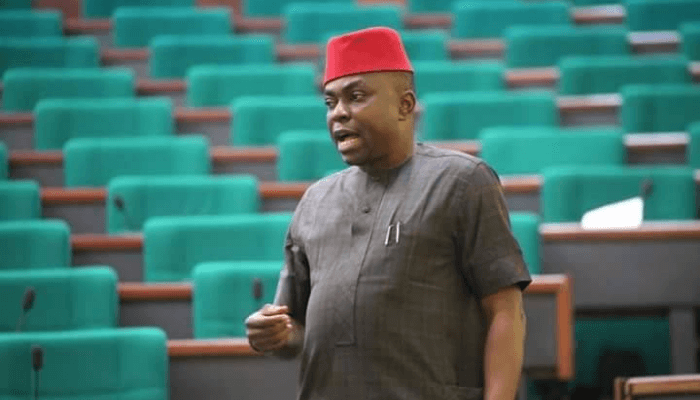
INEC has no excuse to fail in 2027, says ex-Abia lawmaker
Mr Nkole warned that Nigerians were not ready to accept anything short of free, fair and credible elections.
Economy
Delta govt seeks World Bank support for urban development projects
Commissioner for Economic Planning, Sonny Ekedayen, said the support would help the state review and strengthen urban planning laws and master plans.
Economy
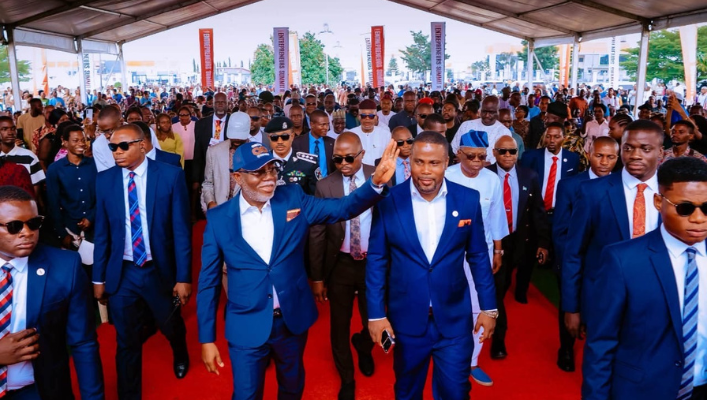
Gov Aiyedatiwa unveils solar power initiative for 1,000 businesses in Ondo
Mr Aiyedatiwa said the initiative, which would cover the state’s 18 local government areas, was designed to reduce energy costs for small businesses.
Hot news Home top
Blood Transfusion: Jehovah’s Witnesses revise medical guidelines
Jehovah’s Witnesses revised its blood transfusion policy to allow members to receive or donate four blood components, based on their conscience.
Heading 4
OK Movement: NDC moves to sanction John Ugulu for unauthorised Obi campaign
The NDC said the presidential campaign council list for Messrs Obi and Kwankwaso announced by John Ugulu, “did not emanate from the party.”


