

FG, group partner on cassava, ginger, sesame industrialisation
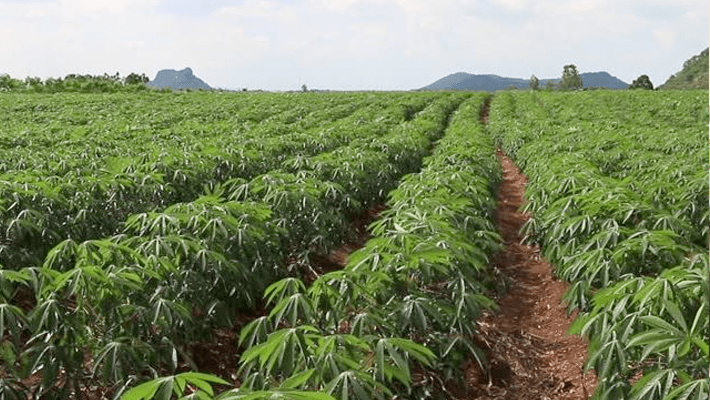
The Federal Ministry of Agriculture and Food Security and the Pan African Alliance of Small and Medium Industries (PAOSMI) have resolved to collaborate to accelerate agro-industrialisation in Nigeria.
The decision was reached at a roundtable meeting between the Minister of Agriculture, Abubakar Kyari, and the Director-General of PAOSMI, Henry Emejuo, on Thursday in Abuja.
The partnership will focus on cassava, soybean, ginger, and sesame value chains.
In his remarks, Mr Emejuo highlighted ongoing interventions across the cassava, sesame, and ginger value chains and said the initiative aligns with PAOSMI’s AU Agenda 2063 Community Activation Project (AU-CAP).
He explained that PAOSMI is a private sector-driven network operating in 40 countries, aimed at advancing industrialisation across agro value chains by activating community-based enterprises for continental growth.
He said, “The time has come for stakeholders to stop working in silos and ensure synergy and coordinated activities for continental growt.”
Mr Emejuo called on stakeholders to deepen engagement on cassava industrialisation to boost people’s wealth, following the successful African Conference on Cassava.
He also urged the speedy passage of the High Quality Cassava Flour (HQCF) Bill in the Senate, which seeks to mandate 20 per cent inclusion of cassava flour in pastries, among other provisions.
Also speaking, Director at PAOSMI, Lawal Buga, said cassava remains a flagship value chain due to its importance for food security, industrial raw materials, and rural employment.
Mr Buga outlined key actions for cassava, including promotion of industrialisation, HQCF, starch, ethanol, sustainable aviation fuel, sweeteners, bio-inputs, and animal feed.
He stressed that farmers should be aggregated, SMEs engaged, and processing clusters developed, while private sector players, including processors, industrial off-takers, aggregators, and investors losely involved.
He added that this would strengthen demand-driven production and cut post-harvest losses.
On sesame and ginger, Mr Buga said PAOSMI is advancing them as priority export crops by ensuring quality compliance, traceability, and integration of SMEs and cooperatives into regional and international markets to increase foreign exchange earnings and rural incomes.
He noted that AU-CAP serves as PAOSMI’s framework for translating Agenda 2063 into community-level economic outcomes, focusing on agro-enterprise-led activation, youth and women inclusion, and linking production to processing, markets, and finance.
Responding, Mr Kyari expressed delight at PAOSMI’s interest in cassava industrialisation.
He said the ministry, in collaboration with partners, was already working to boost production to meet both local and export demand.
Mr Kyari noted Nigeria’s partnership with Saudi Arabia requires production of 1.2 million tonnes of soybean, in addition to the local demand of 2.4 million tonnes.
“We look forward to extensive collaboration. Let us draw a timeline so we know what we want to achieve. I will also request the chairman of the Nigeria Cassava Growers Association to join to form a Public Private Partnership (PPP),” he said.
Earlier, chairman of a U.S.-based agricultural policy think-tank, Shine Bridge Incorporated, Tony Bello, emphasised that stakeholder synergy, policy reforms, and science-driven food technology innovation were key to boosting local consumption and sustainable export growth.
Also, Chairman of the Nigeria Cassava Growers Association, Mustapha Dan-Karo, said cassava production is the foundation of industrialisation for food, fuel, and energy.
He highlighted that cassava waste, which could be used to generate energy, was currently being lost.
He pledged to upscale cassava farmer data to coordinate the collection and processing of peels and other residues, potentially solving about 80 per cent of the sector’s challenges.
(NAN)

We have recently deactivated our website's comment provider in favour of other channels of distribution and commentary. We encourage you to join the conversation on our stories via our Facebook, Twitter and other social media pages.

More from Peoples Gazette

Agriculture
FG tasks ECOWAS on leveraging financing strategies for agroecology
The federal government has urged stakeholders in the agriculture and finance sectors in the West Africa region to leverage financing strategies to enhance agroecology practices

Politics
Katsina youths pledge to deliver over 2 million votes to Atiku
“Katsina State is Atiku’s political base because it is his second home.”

NationWide
Court orders British govt to pay £420 million to families of 21 Enugu coal miners killed by colonial masters
The British superintendent shot and killed 21 coal miners and injured 51 others.

States
Oyo assembly accepts member’s apology over defamatory statement against colleague
The speaker stated, “There’s need for all members to uphold the highest standards of discipline, decorum, and accountability.”

States
Surrogacy regulation bill scales second reading in Plateau assembly
Mr Daniel said that the bill, if passed into law, would position the state as a pioneer in structured surrogacy governance in Nigeria.

States
Police rescue four kidnap victims in Delta
Mr Edafe said that the victims were taken to the hospital for proper medical examinations.

World
Former Croatian president Josipović advocates EU, China cooperation
Mr Josipović noted, “I’m not in favour of these trade wars.”

Heading 1
UK court sentences Adedapo Adegbola to life in prison for killingex-girlfriend
The judge said, “Your controlling behavior led her to end the relationship. What is plain is that you were not prepared to ùaccept that.”


