

Experts urge immediate action to curb female genital mutilation

Experts have warned against the practice of female genital mutilation (FGM), highlighting its devastating health impacts and urging immediate action to curb the practice.
They made the remarks in separate interviews on Friday, in commemoration of the International Day of Zero Tolerance for FGM.
The theme for the 2026 International Day of Zero Tolerance for FGM is “Towards 2030: No end to FGM without sustained commitment and investment.”
A gynaecologist, Olufiade Oyerogba, said that from a gynaecological and public health perspective, FGM had no medical benefit but was associated with serious short- and long-term complications.
She said the complications included severe pain and bleeding, shock, infection and sepsis, injury to surrounding tissues, and risk of death in extreme cases, among others.
The gynaecologist warned that the long-term complications were increased risk of stillbirth and neonatal death, chronic pelvic pain, recurrent urinary tract and genital infections, menstrual difficulties, etc.
Ms Oyerogba cautioned parents to desist from practising FGM, stressing that it did not protect morality, fertility, or marriage prospects, as the practice was often wrongly believed to do.
She urged the government and policymakers to strengthen enforcement of anti-FGM laws and invest in education, women’s empowerment, and community engagement.
“FGM is not a cultural inevitability; it’s a preventable form of violence. Culture is dynamic, and harmful practices should be stopped; ending FGM requires collective responsibility, not silence,” she said.
According to her, FGM remains a significant public health and human rights issue in Nigeria.
“National surveys estimate that about 20 per cent of Nigerian women aged 15–49 have undergone FGM, making Nigeria one of the countries with the highest absolute number of affected women globally, due to its large population.
“The practice varies widely by region, ethnicity, and socio-cultural norms, with higher prevalence in parts of the South-East, South-West, and South-South.
“Encouragingly, prevalence is declining among younger age groups, reflecting the impact of education, advocacy, and policy interventions,” she said.
Ms Oyerogba noted that Nigeria had made notable efforts to reduce FGM, including the Violence Against Persons (Prohibition) Act (VAPP) 2015, which criminalises FGM, state-level anti-FGM laws, and community-based advocacy and awareness programmes, among others.
She, however, emphasised that enforcement gaps, cultural resistance, and medicalisation of FGM remained challenges.
Ms Oyerogba called for the integration of FGM prevention into routine maternal, adolescent, and reproductive health services.
Also, Omolade Falade, a public health physician at Bethel Specialist Hospital, Ibadan, noted a reduction in prevalence rates over the past few decades.
According to her, health complications of FGM include excessive blood loss, infections, poor wound healing, and multiple complications such as chronic pain, anxiety, depression, post-traumatic stress disorders, and severe difficulties during childbirth, among others.
“These challenges during childbirth could result in stillbirths or death of the infant within the first 28 days of life,” she said.
Ms Falade said medical professionals could assist in preventing FGM through health education during all patient contacts, such as paediatric visits, as well as routine health visits.
She stressed that it was essential that males be educated as well, given the patriarchal nature of the society.
Ms Falade also said critical stakeholders, such as the community, religious and women leaders, must also be engaged to curb FGM.
Dare Adaramoye, a UNICEF field officer on FGM, said the menace persisted in many communities because of a mix of deeply rooted cultural and social norms, gender inequality, and misconceptions about its purpose.
He said UNICEF, with other partners including the government and civil society, worked with boys, girls, women, and men to challenge and change beliefs that sustained FGM.
Mr Adaramoy said UNICEF, among other initiatives, also promoted the enforcement of laws such as the Violence Against Persons Prohibition Act, which criminalises FGM.
“UNICEF supported survivors of FGM through its livelihood support programmes with Trailblazer Initiatives and access to free healthcare, including surgery, among others,” he said.
(NAN)

We have recently deactivated our website's comment provider in favour of other channels of distribution and commentary. We encourage you to join the conversation on our stories via our Facebook, Twitter and other social media pages.

More from Peoples Gazette

Agriculture
FG tasks ECOWAS on leveraging financing strategies for agroecology
The federal government has urged stakeholders in the agriculture and finance sectors in the West Africa region to leverage financing strategies to enhance agroecology practices

Politics
Katsina youths pledge to deliver over 2 million votes to Atiku
“Katsina State is Atiku’s political base because it is his second home.”

Lagos
Lagos: Agege council, LSETF partner to empower small businesses
He said the collaboration reflects his administration’s commitment to strengthening grassroots entrepreneurship.

NationWide
FG approves unified procedure for shoreline allocation, reclamation
Mr Haiba said that the new guidelines would ensure uniformity, accountability and transparency in the sector.
Education
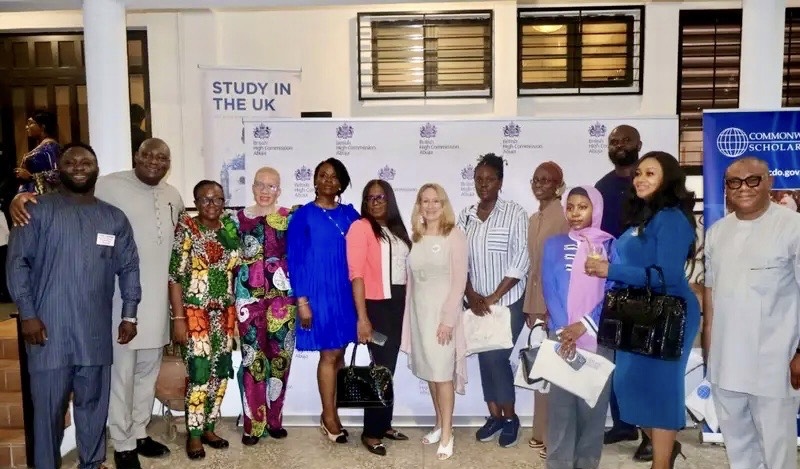
UK Mission welcomes 99 Nigerian Chevening, Commonwealth scholars
Nigeria currently has an alumni base with over 3,000 Commonwealth and over 1,500 Chevening scholars.

Abuja
Wike gives FCT contractors three-day ultimatum to clear refuse in satellite towns
Mr Wike assured residents that all refuse would be evacuated to restore environmental cleanliness.

NationWide
2027: Engineers support real-time e-transmission of results, fault Senate’s rejection
He said the Senate made the decision without consulting with any professional body like the NSE.

NationWide
CDHR faults Senate’s rejection of e-transmission of election results
CDHR described the move as a setback for democratic accountability and electoral transparency.


