
Enugu govt urges individuals, private sector to adopt public health facilities
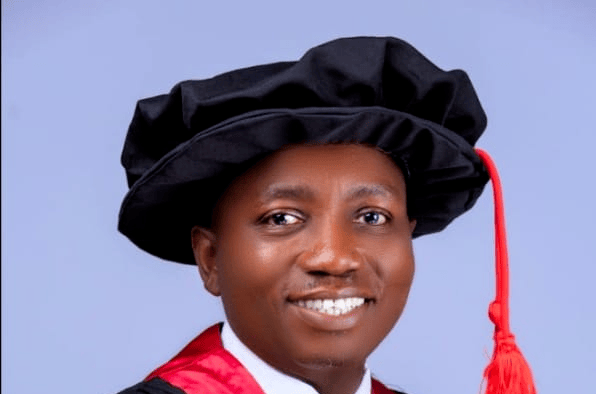
George Ugwu, the health commissioner in Enugu, has called on influential, wealthy Nigerians and private organisations to adopt public health facilities in their communities.
Mr Ugwu, a professor of Obstetrics and Gynaecology, made the call on Sunday in Enugu while further explaining his ‘Community Health Stewardship model’, which he proposed while delivering the 251st inaugural lecture of the University of Nigeria, Nsukka (UNN).
The 251st UNN Inaugural Lecture, which was delivered on Thursday, had the title ‘The Mother, the Child and the State: My Triumphant Journey from Evidence to Action’. He noted that effective community contributions, through community health stewardship, would supplement public funding.
According to him, women, young people, persons with disabilities, poor households and marginalised settlements need meaningful representation or someone formidable to stand for them and ensure access to quality healthcare always gets to them in health facilities in their locality.
He also recommended protecting the health workforce, making health data usable, and translating it into health impact for people.
Mr Ugwu, a research clinician with over two decades of experience, noted that the main clinical causes of maternal and newborn mortality were well known.
He said that high-quality University of Nigeria, Nsukka (UNN)skilled attendance at birth, timely emergency obstetric and newborn care, blood transfusion, safe surgery, newborn resuscitation, family planning and appropriate postnatal care would check maternal death or close-to-death situations (maternal near-miss).
The don noted that the persistent burden of newborn mortality, maternal mortality and maternal near-miss therefore reflects more than a shortage of medical knowledge.
According to him, a clinically effective intervention has no effect when the woman cannot access it, the facility does not provide it, the health worker lacks the required tools, the family cannot afford it, or the institution does not learn from previous failures.
Mr Ugwu was credited with making pivotal contributions to public health and clinical medicine as a clinician and technocrat, with over 70 academic research publications to his credit.
(NAN)

We have recently deactivated our website's comment provider in favour of other channels of distribution and commentary. We encourage you to join the conversation on our stories via our Facebook, Twitter and other social media pages.

More from Peoples Gazette

Agriculture
FG tasks ECOWAS on leveraging financing strategies for agroecology
The federal government has urged stakeholders in the agriculture and finance sectors in the West Africa region to leverage financing strategies to enhance agroecology practices

Politics
Katsina youths pledge to deliver over 2 million votes to Atiku
“Katsina State is Atiku’s political base because it is his second home.”

Economy
Several people killed in Amazon cargo plane crash at Miami airport
Five people died, and five more were injured after an Amazon cargo plane overran a runway at Miami International Airport, crashing into vehicles and disrupting air travel.

World
World Meteorological Organisation warns wildfires will hamper meeting WHO’s air quality guidelines
WMO on Monday warned that rising pollution from wildfires and heat waves will hamper global efforts to improve air quality and protect human and ecosystem health.
Abuja
Police arrest 10 suspected vandals in Abuja
The police command in Abuja says it nabbed 10 suspects for vandalism across Kubwa, Wuye, and the National Mosque area.

Opinion
Uber’s exit shows Nigeria’s ride-hailing industry has hit a wall
Uber is not leaving because Nigerians stopped booking rides. It is leaving because the economics of ride-hailing in Nigeria broke.

Economy
Nigerians ‘won’t be missing’ Uber as drivers, passengers share ride-hailing experiences
“The market is still here in Nigeria, and I am signed up to other apps. They are basically the same people using different apps,” a driver said.

Opinion
So what if Ikemefuna Okeke is now Karl Von Batten?
The easiest way to avoid answering an uncomfortable question is to change the subject from what someone did to who he supposedly is.


