

EFCC declares Sujimoto boss Olasijibomi Ogundele wanted for alleged money laundering

The Economic and Financial Crimes Commission (EFCC) has declared Olasijibomi Suji Ogundele, founder and chief executive of Sujimoto Luxury Construction Limited, wanted over alleged diversion of funds and money laundering.
In a notice issued on Thursday and signed by the commission’s head of media and publicity, Dele Oyewale, the anti-graft agency said Mr Ogundele, 44, is being sought in connection with financial crimes running into billions of naira.
His last known address, according to the EFCC, is G29, Banana Island, Ikoyi, Lagos.
“The public is hereby notified that Olasijibomi Suji Ogundele of Sujimoto Luxury Construction Limited, whose photograph appears above, is wanted by the Economic and Financial Crimes Commission (EFCC) in an alleged case of diversion of funds and money laundering,” the statement read in part.
The EFCC urged members of the public with useful information about Mr Ogundele’s whereabouts to report to any of its zonal offices across the country or to the nearest police station.
Mr Ogundele, an indigene of the Ori-Ade Local Government Area of Osun State, is widely known for his luxury real estate projects in Lagos.
This is not the first time the real estate mogul has been accused of fraud. In October 2024, operatives of the Nigeria Police Force, attached to the Force Criminal Investigations Department (FCID), Abuja, arrested Mr Ogundele for alleged $325,000 fraud.
The FCID launched an investigation into how Mr Ogundele’s real estate firm, Sujimoto Construction Limited, received $325,000 from a client for a real estate deal since November 2020 but allegedly failed to deliver on the project or refund the money.
The probe followed a petition to the Deputy Inspector-General of Police in charge of criminal investigations by Pelumi Olajengbesi, a lawyer from Law Corridor.
The petition stated that the real estate mogul obtained $325,000 on November 5, 2020, from one Kabiru Garba Ibrahim.
The sum, according to the petition, was meant for the 50 per cent payment of the agreed sum of $650,000 for a one-unit of a three-bedroom flat at an estate known as LeonardoBySujimoto Homes.
Mr Olajengbesi argued that the actions of the two parties constitute criminal elements of obtaining money by false pretence, fraudulent misrepresentation, and criminal breach of trust because Mr Ibrahim neither got the property nor his money back from the company.

We have recently deactivated our website's comment provider in favour of other channels of distribution and commentary. We encourage you to join the conversation on our stories via our Facebook, Twitter and other social media pages.


More from Peoples Gazette

Agriculture
FG tasks ECOWAS on leveraging financing strategies for agroecology
The federal government has urged stakeholders in the agriculture and finance sectors in the West Africa region to leverage financing strategies to enhance agroecology practices

Politics
Katsina youths pledge to deliver over 2 million votes to Atiku
“Katsina State is Atiku’s political base because it is his second home.”

States
Police arrest suspected vandal, recover telecom mast in Akwa Ibom
Ms John said the recovered truck and the stolen telecom mast were in police custody.

States
Abia sacks six justice ministry’s workers indicted in salary fraud
Mrs Jerry-Eze said that the sacked workers would be handed over to a relevant law enforcement agency for prosecution.
States
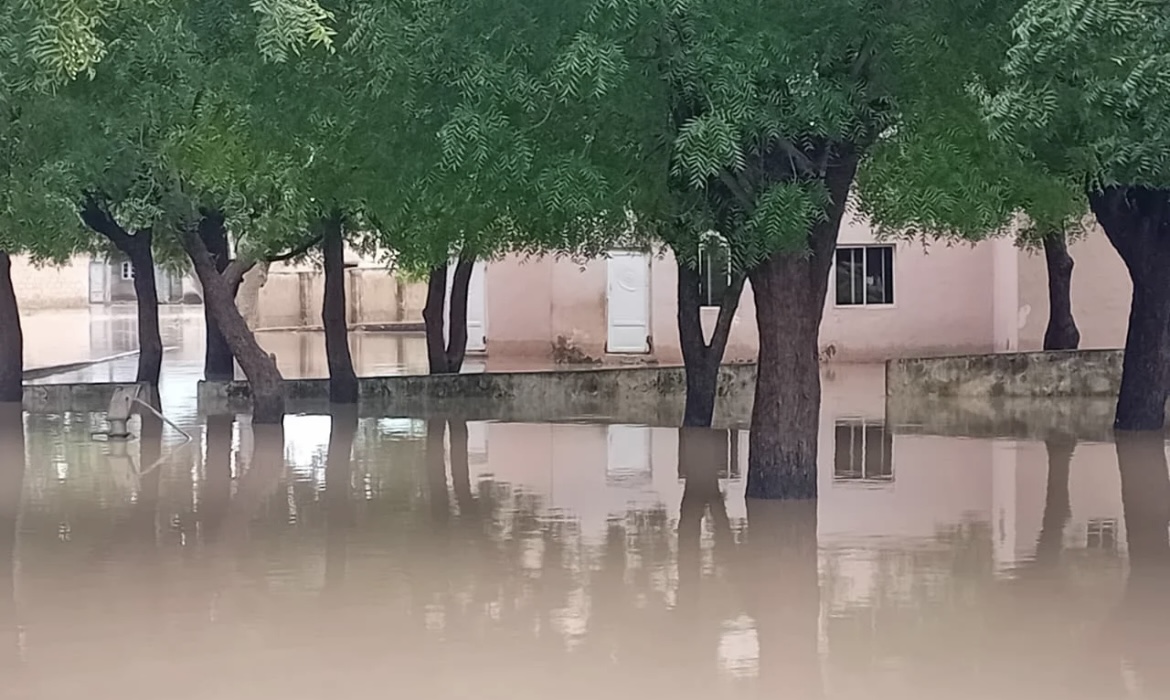
Flood forces closure of 40-year-old Friday mosque in Katsina
Mr Bature stated that experts advised that the mosque should be closed having been submerged by water.

States
Police arrest suspected trafficker, rescue three children in Nasarawa
Mr Nansel said the commissioner also urged officers to intensify efforts at unravelling other reported cases of missing children

States
Kano chief judge frees six inmates
Ms Abdu-Aboki granted the release during her official working visit to custodial facilities in the state.

Uncategorized
Stakeholders differ on FG’s embargo on establishment of new public varsities
Stakeholders in the education sector, in separate interviews with journalists, expressed divergent views on the federal government’s decision to place an embargo on the establishment of new public


