

ECOWAS raises alarm over rising drug abuse, trafficking in West Africa

The Economic Community of West African States (ECOWAS) on Wednesday raised an alarm over the escalating cases of drug abuse across the sub-region.
Daniel Amankwa, ECOWAS principal program officer, drug prevention and control, spoke in an interview with journalists in Abuja on the sidelines of the validation of the 2025 West African Epidemiology Network on Drug Use (WENDU) report.
He said the regional drug monitoring exercise was critical to understanding evolving trends and guiding evidence-based interventions across member states.
Mr Amankwa decried the rapidly changing landscape of drug abuse and trafficking across the region and the emergence of new synthetic substances.
According to him, the rising cocaine trafficking and weakening family structures are fuelling an increasingly complex public health and security crisis.
“The WENDU report is a report of what is happening regarding drug abuse, illicit drug trafficking, and related crimes in West Africa.
“Every year, member states collect data and submit it to the ECOWAS Commission. We compile the information into a regional report and invite them to validate it to ensure accuracy,” he explained.
The programme officer noted that although the 2025 report was still undergoing validation and could not yet be discussed conclusively, findings from the completed 2024 report revealed worrying trends across the region.
“Marijuana remains the highest consumed illicit drug in the region. However, we are also seeing a sharp rise in new psychoactive substances, including high-dose tramadol, Kush, and other illicit pharmaceutical products whose chemical compositions have been altered.
“The concern is not legitimate pharmaceutical products but counterfeit and illegally modified drugs containing dangerously high dosages.
“We are talking about tramadol that should ordinarily contain 50 milligrams but is now found in 200, 250, 300, 400, and even 500 milligram formulations being abused,” he further said.
Mr Amankwa said cocaine trafficking was expanding rapidly across West Africa, noting that the 2024 report showed that cocaine arrests and seizures doubled across the region.
“Preliminary indications suggest that this trend is continuing in 2025, although the data are not yet conclusive,” he added.
The programme officer stressed that drug abuse was also imposing enormous social and economic costs on West African societies, particularly among young people.
He explained that drug dependence creates a vicious cycle linking addiction, unemployment, and poverty.
“When people become addicted, it becomes difficult for them to work effectively. That contributes to unemployment, which in turn fuels poverty.
“At the same time, poverty itself can push some people into drug use. It is a cycle that reinforces itself,” he said.
Mr Amankwa added that drug abuse also contributed significantly to criminal activities, as individuals struggling with drug dependence often resort to crime to finance their addiction.
He said that tackling the drug abuse crisis required addressing its root causes rather than relying solely on arrests and seizures.
Mr Amankwa also noted that drug trafficking networks constantly adapted to enforcement efforts by introducing new substances and concealment methods.
“That is why the problem appears persistent. It is not necessarily because authorities are doing nothing; the criminal networks continue to evolve,” he said.
The ECOWAS official called for a comprehensive strategy centred on four pillars: strengthening families, prevention through education, effective law enforcement, and accessible treatment for people with drug use disorders.
He also called for drug education to begin at an early age, saying, “Drug prevention should not wait until secondary school. Young people must understand the dangers and misconceptions surrounding drugs before they are exposed to them.”
Mr Amankwa urged governments to expand treatment and rehabilitation services for individuals already suffering from addiction while reducing stigma.
On regional cooperation, he noted that collaboration among anti-drug agencies within ECOWAS had improved considerably in recent years.
West Africa has continued to confront increasingly sophisticated drug trafficking organisations and emerging synthetic substances over the years.
(NAN)

We have recently deactivated our website's comment provider in favour of other channels of distribution and commentary. We encourage you to join the conversation on our stories via our Facebook, Twitter and other social media pages.

More from Peoples Gazette

Agriculture
FG tasks ECOWAS on leveraging financing strategies for agroecology
The federal government has urged stakeholders in the agriculture and finance sectors in the West Africa region to leverage financing strategies to enhance agroecology practices

Politics
Katsina youths pledge to deliver over 2 million votes to Atiku
“Katsina State is Atiku’s political base because it is his second home.”

Sport
Five things to know about teams yet to concede any goal at 2026 World Cup
The 2026 World Cup, with 48 teams participating, has seen teams show their defensive class, but only two teams have yet to be breached.

World
Thirteen people killed as Russia rained bombs on Kyiv, says Ukraine
Ukraine’s air force said Russia launched 74 missiles and 496 drones overnight, mainly targeting the capital.

Sport
Kings of assists in 2026 FIFA World Cup (Part 1)
FIFA has been recording assists since the 1966 World Cup. Brazil legend Pelé holds the 56-year-old record for the most assists in a single World Cup, with six.

Education
TVET reforms boosting technical college enrolment: NABTEB
NABTEB says Technical and Vocational Education and Training reforms are increasing enrolment in technical colleges nationwide.

Economy
Google projects $90 billion economic boost, unveils five AI initiatives for Africa
Google Cloud on Wednesday says its Johannesburg Cloud Region could generate an additional $90.6 billion in economic output and support nearly 315,000 jobs by 2030.
Politics
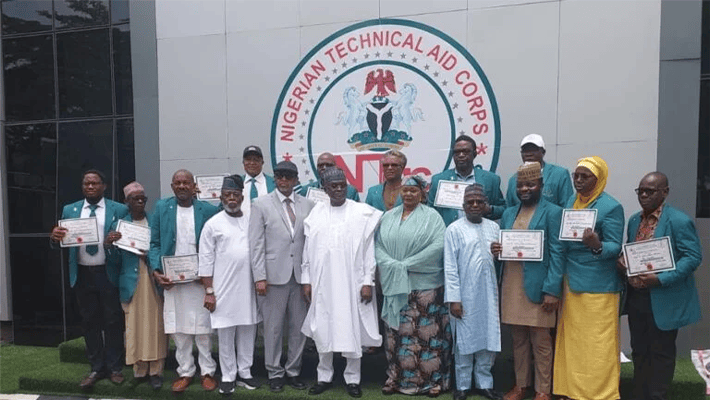
NTAC revitalised under Tinubu’s ‘4D foreign policy: Official
Yusuf Yakub, the director-general of Nigerian Technical Aid Corps, says President Bola Tinubu’s ‘4D Foreign Policy’ has revitalised NTAC.


