

Brunkow, Ramsdell, Sakaguchi win 2025 Nobel Prize in physiology or medicine

Three pioneering immunologists, two Americans, Mary Brunkow and Fred Ramsdell, alongside Japan’s Shimon Sakaguchi, have been awarded the 2025 Nobel Prize in Physiology or Medicine for their groundbreaking discoveries on how the human body regulates its immune system, opening new frontiers for treating autoimmune diseases and cancer.
The Nobel Assembly at the Karolinska Institute in Sweden announced the award on Monday, citing the trio’s revolutionary work on peripheral immune tolerance and the identification of regulatory T cells (Tregs), specialised immune cells that prevent the body from attacking its own tissues.
In a statement, the committee said the laureates’ discoveries “have laid the foundation for a new field of research and spurred the development of new treatments, for example for cancer and autoimmune diseases”.
“This year’s prize relates to how we keep our immune system under control so we can fight all imaginable microbes and still avoid autoimmune disease,” said Marie Wahren-Herlenius, a rheumatology professor at the Karolinska Institute, during the announcement in Stockholm.
Each of the three winners will share a prize of 11 million Swedish crowns (about $1.2 million) and will receive their medals and diplomas from the King of Sweden at the Nobel ceremony in December.
The Nobel committee credited the scientists with uncovering a fundamental mechanism that keeps the immune system in check, the function of regulatory T cells, often described as the body’s “security guards”. These cells prevent immune responses from going rogue, thereby reducing the risk of autoimmune diseases like multiple sclerosis, type 1 diabetes, and rheumatoid arthritis.
Their research also paved the way for therapies designed to enhance or suppress immune responses, approaches that are now being explored in cancer immunotherapy and chronic inflammatory conditions.
Ms Brunkow, a senior programme manager at the Institute for Systems Biology in Seattle, helped uncover genetic mutations that lead to immune dysregulation. Ramsdell, scientific adviser and co-founder of Sonoma Biotherapeutics in San Francisco, extended that work by studying how immune cells can be manipulated to restore balance in patients with immune disorders.
Mr Sakaguchi, a professor at Osaka University in Japan, first identified and characterised regulatory T cells in the 1990s, a discovery that reshaped the understanding of immune tolerance, how the body learns to distinguish between self and foreign tissue.
Speaking to reporters outside his laboratory in Osaka after learning of the award, Mr Sakaguchi said, “I feel it is a tremendous honour.”
He described the recognition as “a validation of decades of work by many scientists around the world”.
Thomas Perlmann, secretary of the Nobel Assembly, said he was only able to reach one of the three winners before the public announcement.
“He [Sakaguchi] sounded incredibly grateful, expressed that it was a fantastic honour, and he was quite taken by the news,” Mr Perlmann told journalists.
The laureates’ collective work has been hailed as a major contribution to modern medicine, transforming how scientists and clinicians approach diseases that arise when the immune system fails to regulate itself.
The discoveries underpin a growing class of precision immunotherapies that are helping oncologists target tumours more effectively while reducing harmful autoimmune side effects.
Over the past decade, Messr Sakaguchi and Ramsdell’s findings have informed drug development pipelines at leading biotechnology firms, while Ms Brunkow’s genetic studies continue to influence personalised medicine research.
The Nobel Prize in Physiology or Medicine, first awarded in 1901, remains one of the most prestigious recognitions in global science. Each year, it honours individuals whose discoveries have profoundly advanced humanity’s understanding of life and health.
The 2025 award reinforces the Nobel Committee’s long-standing emphasis on immunology. Previous laureates in the field include James Allison and Tasuku Honjo in 2018 for discovering cancer immunotherapy principles, and Bruce Beutler and Jules Hoffmann in 2011 for identifying innate immune mechanisms.
This year’s selection, however, highlights not the body’s defences, but its restraint, how the immune system learns when not to attack.
With autoimmune diseases affecting hundreds of millions worldwide, and immune-based therapies emerging as the future of cancer treatment, the work of Ms Brunkow, Messrs Ramsdell, and Sakaguchi stands as a defining milestone in modern medicine.

We have recently deactivated our website's comment provider in favour of other channels of distribution and commentary. We encourage you to join the conversation on our stories via our Facebook, Twitter and other social media pages.


More from Peoples Gazette

Agriculture
FG tasks ECOWAS on leveraging financing strategies for agroecology
The federal government has urged stakeholders in the agriculture and finance sectors in the West Africa region to leverage financing strategies to enhance agroecology practices

Politics
Katsina youths pledge to deliver over 2 million votes to Atiku
“Katsina State is Atiku’s political base because it is his second home.”

Anti-Corruption
Court freezes aviation coy’s account over alleged NNPCL fraud
Ms Ofulue had told the court that the account was currently being investigated in a case of criminal misappropriation and money laundering.
World
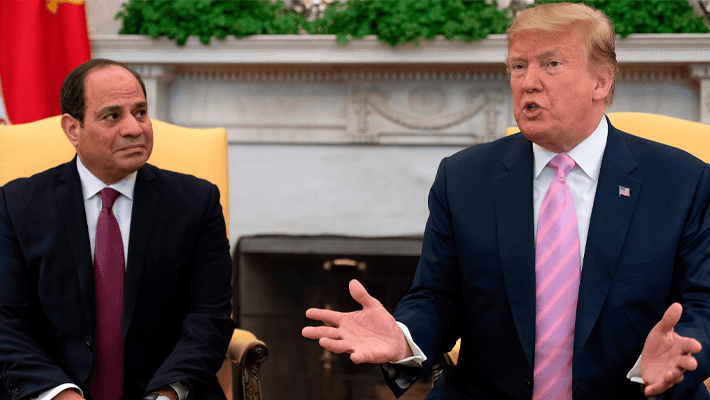
Egypt’s al-Sissi backs Trump’s peace plan for Gaza
Mr Al-Sissi thanked Mr Trump in a televised speech on Monday for helping to initiate a ceasefire after “two years of war, genocide, killing, and destruction.”

Politics
Voter registration crucial to Tinubu’s victory; his critics will soon hail him: Lawmaker
Mr Adedayo urged APC leaders to begin massive grassroots mobilisation for the president by ensuring that eligible citizens register ahead of 2027.
Agriculture
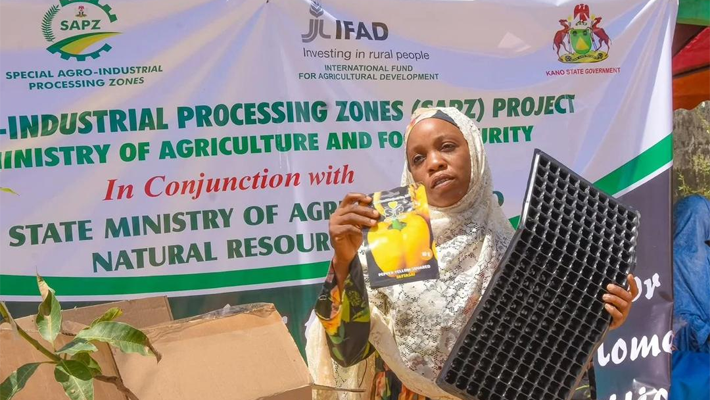
SAPZ launches nutrition-focused gardening project in eight Kano LGAs
The initiative, under the SAPZ Targeted Nutrition Support Programme, aims to support households across eight local government areas.

States
Anambra govt declares October 7 school-free day
Governor Chukwuma Soludo of Anambra has declared Tuesday, October 7, a school-free day to celebrate and honour teachers across the state.

Economy
Kaduna residents rally for Dangote Refinery, demand end to oil sector sabotage
They condemned what they described as a systemic sabotage of the refinery and other local refining efforts.


