

IPEN urges tougher controls on lead chromates to protect children
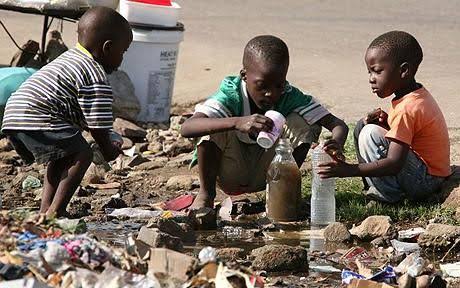
The International Pollutants Elimination Network has called for stronger international controls on lead chromates, a key ingredient in lead-based paints, to reduce lead exposure and protect millions of children worldwide.
IPEN made the call in a statement issued on Friday to mark World Environment Day 2026.
The statement was signed by Leslie Adogame, executive director of Sustainable Research and Action for Environmental Development, an IPEN member organisation.
The network urged parties to the Rotterdam Convention to list lead chromates under the convention’s prior informed consent procedure. According to IPEN, the measure would require exporting countries to notify importing countries and obtain their consent before shipping the substance.
The organisation noted that Morocco, Cameroon, Switzerland and Australia had already notified the convention of their bans on lead chromates in paint, paving the way for discussions at the next Conference of the Parties.
It said member organisations in more than 20 low- and middle-income countries were assessing the trade and use of lead chromates and would engage their governments to support the proposed listing.
Sara Brosché, IPEN science adviser and director of its Lead Paint Elimination Campaign, said lead paint remained one of the most widespread sources of lead exposure among children.
IPEN said its Nigerian member organisation, SRADeV, remained concerned about continued imports of lead chromates despite years of advocacy against their use.
Mr Adogame said data from the National Agency for Food and Drug Administration and Control showed that a small number of companies dominated the country’s lead chromate import market. According to him, the 10 largest importers brought in more than 2,000 metric tonnes of lead chromates valued at over N5 billion between 2020 and 2025.
IPEN also cited findings from its report, ‘Exporting Lead Poisoning: The Toxic Trade in Lead Chromates’. The report found that although the European Union and several other countries had banned the domestic use of lead chromates, they continued to permit their production and export.
According to the report, European Union exports of lead chromates were shipped to between 43 and 48 countries from 2020 to 2022, including nations that had already restricted or banned lead paint.
It added that export records from India showed shipments to 78 countries during the same period, with 44 of the importing countries having existing lead paint restrictions. The report further noted that 65 countries reported annual imports of about 4,000 metric tonnes of chrome-based pigments from Canada between 2020 and 2022.
IPEN said lead paint had long been recognised as a major source of childhood lead exposure and could cause irreversible damage to the brain, nervous, immune, reproductive and cardiovascular systems.
The organisation said exposure had been linked to reduced intelligence quotient, attention disorders, hypertension and other health challenges.
In 2009, 120 countries supported a global phase-out of lead-based paint due to its adverse health effects.
IPEN said its member groups had tested more than 5,000 paint samples in 59 countries since 2007 and used the findings to support awareness campaigns and regulatory reforms. According to the network, the initiative contributed to the adoption of lead paint regulations by the East African Community in 2019, the Economic Community of West African States in 2024, the Eurasian Economic Union in 2025 and more than 30 countries globally.
It, however, stressed the need for stricter controls on international trade in lead chromates to achieve the global elimination of lead paint.
According to the World Health Organisation, nearly 900,000 deaths are linked to lead exposure annually, with Sub-Saharan Africa accounting for about 47,000 deaths. Nigeria is among the countries most affected, with an estimated 80 million children exposed to lead.
Data from the African Field Epidemiology Network indicate that children aged between nine and 59 months are particularly vulnerable, as even low levels of lead exposure can impair cognitive development, learning ability and long-term health outcomes.
The 2010 lead poisoning outbreak in Zamfara linked to illegal gold mining reportedly claimed about 400 children’s lives, while similar incidents have occurred in Sokoto, Niger and Kaduna states.
(NAN)

We have recently deactivated our website's comment provider in favour of other channels of distribution and commentary. We encourage you to join the conversation on our stories via our Facebook, Twitter and other social media pages.

More from Peoples Gazette

Agriculture
FG tasks ECOWAS on leveraging financing strategies for agroecology
The federal government has urged stakeholders in the agriculture and finance sectors in the West Africa region to leverage financing strategies to enhance agroecology practices

Politics
Katsina youths pledge to deliver over 2 million votes to Atiku
“Katsina State is Atiku’s political base because it is his second home.”

World
Israel pledges to deepen partnership with Nigeria to bolster AI
The Israeli ambassador added that deepening the Israel-Nigeria partnership was the only way to achieve that objective.

Education
UNIPORT gets new vice-chancellor
The governing council of the University of Port Harcourt has approved the appointment of Princewill Chike as the institution’s 10th vice-chancellor.
States
Traffic Violation: Katsina imposes N50,000 fine on trailer drivers
The Katsina State Road Traffic Agency has imposed a N50,000 fine on trailer drivers and operators of heavy-duty vehicles who violate newly introduced traffic regulations.

Politics
Accord Party condemns attempted assassination of Osun LG chairman, demands investigation
“Osun remains united in support of continued development, peace and prosperity across the state,” Accord Party said.

States
Landscape architects seek action on land restoration, drought resilience
The northern chapter of the Society of Landscape Architects of Nigeria has called for stronger efforts toward land restoration, sustainable land management and drought resilience to address environmental

World
World Environment Day: UN chief advocates protection of forests, land
Mr Guterres made the call in his message marking the 2026 World Environment Day, observed globally on June 5.


